Posts Tagged ‘Cascadia Wildlands’

May02

County Votes Against Anti-mining Effort

Eugene Weekly by Camilla Mortensen
May 2, 2013
 
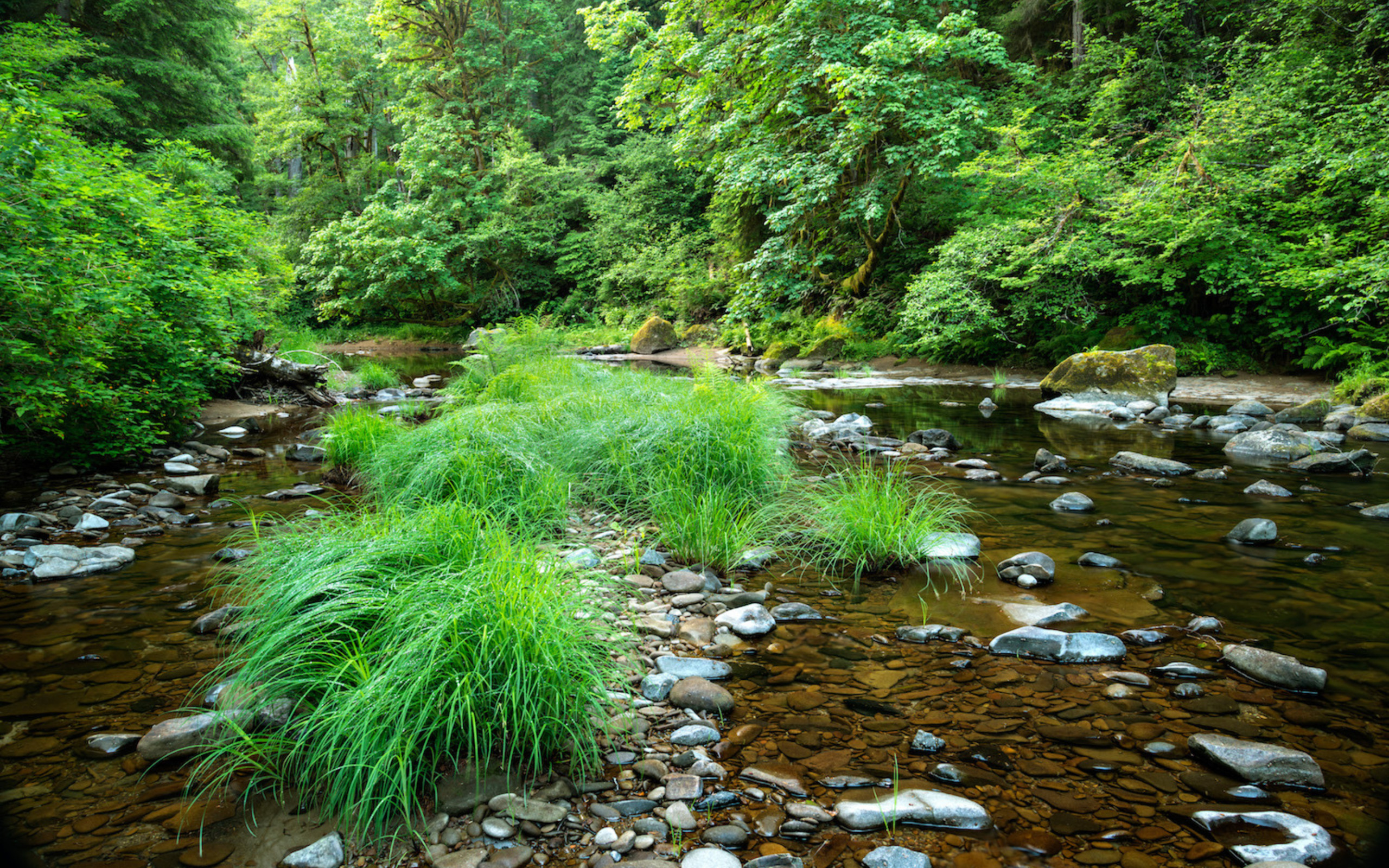
The Oregon Department of Fish and Wildlife killed sea lion number CO22 (or as activist group Sea Shepherd dubbed him, Brian) April 16, for eating too many salmon, but conservationists say that it’s suction dredge mining, sucking up riverbeds in giant vacuums, that poses a bigger threat to Oregon’s rivers and their fish.

There are currently two bills in the Oregon Legislature that could protect Oregon’s rivers from suction dredging and the Lane County commission’s conservative majority recently voted not to support one of them, Senate Bill 401. The other one, SB 838, did not come up for county vote.

SB 401 started off as a bill to put a Scenic Waterway designation on more of Oregon’s rivers and tributaries. Portions of the McKenzie River are already protected as an Oregon Scenic Waterway, but SB 401 would protect the water of the lower McKenzie and its summer steelhead, endangered spring Chinook salmon, endangered bull trout, rainbow trout and cutthroat trout.

Scenic waterways protection means that the Oregon Parks and Recreation Department must be notified of activities proposed within a quarter mile of the bank, such as cutting trees, mining and constructing roads, railroads, utilities, buildings or other structures. The conservative majority of the County Commission bristled at this during their April 23 meeting. They also appeared to not be up-to-date on the current version of SB 401, which according to Josh Laughlin of Cascadia Wildlands, as it has been amended would only require the state of Oregon to review a list of 30 stretches of waterways named in the bill and make a recommendation in two years whether they should be included as scenic waterways.

Commissioner Jay Bozievich said at the meeting he thought that if the parks department “can’t seem to maintain their current parks,” citing issues with Glass Bar Island, then adding more rivers to the list would be problematic. Farr agreed, but specified he was not opposed to protecting drinking water. Commissioner Faye Stewart said he had been contacted by people up the McKenzie concerned about how the river protection might affect “what they can and cannot do on their property.” Pete Sorenson was the only commissioner to vote that the county should endorse SB 401 and look to protecting the river. “Voting against the bills means they are voting against clean water and wild salmon recovery. That is not a popular position this day and age,” Laughlin says.

Stewart also brought up a moratorium on suction dredge mining, but that moratorium is actually part of SB 838, which the county did not vote on. Laughlin says 838 would put a five-year moratorium on suction dredging in state-designated essential salmon habitat until a modernized suction dredge system was implemented.

Laughlin says not only is suction dredging bad for salmon, it can affect human health when mercury becomes converted into methyl mercury, a form that’s toxic to humans and moves easily through the food chain. He says he finds it “incredible that Oregon takes great efforts to protect and restore salmon, like shutting down the commercial fishery periodically or shooting sea lions at Bonneville Dam, but we allow gas-powered vacuums to suck up river bottoms in critical salmon streams.”

Mar27

Federal Court Ruling Puts Brakes on Goose Logging Project

E&E by Scott Streater
March 27, 2013

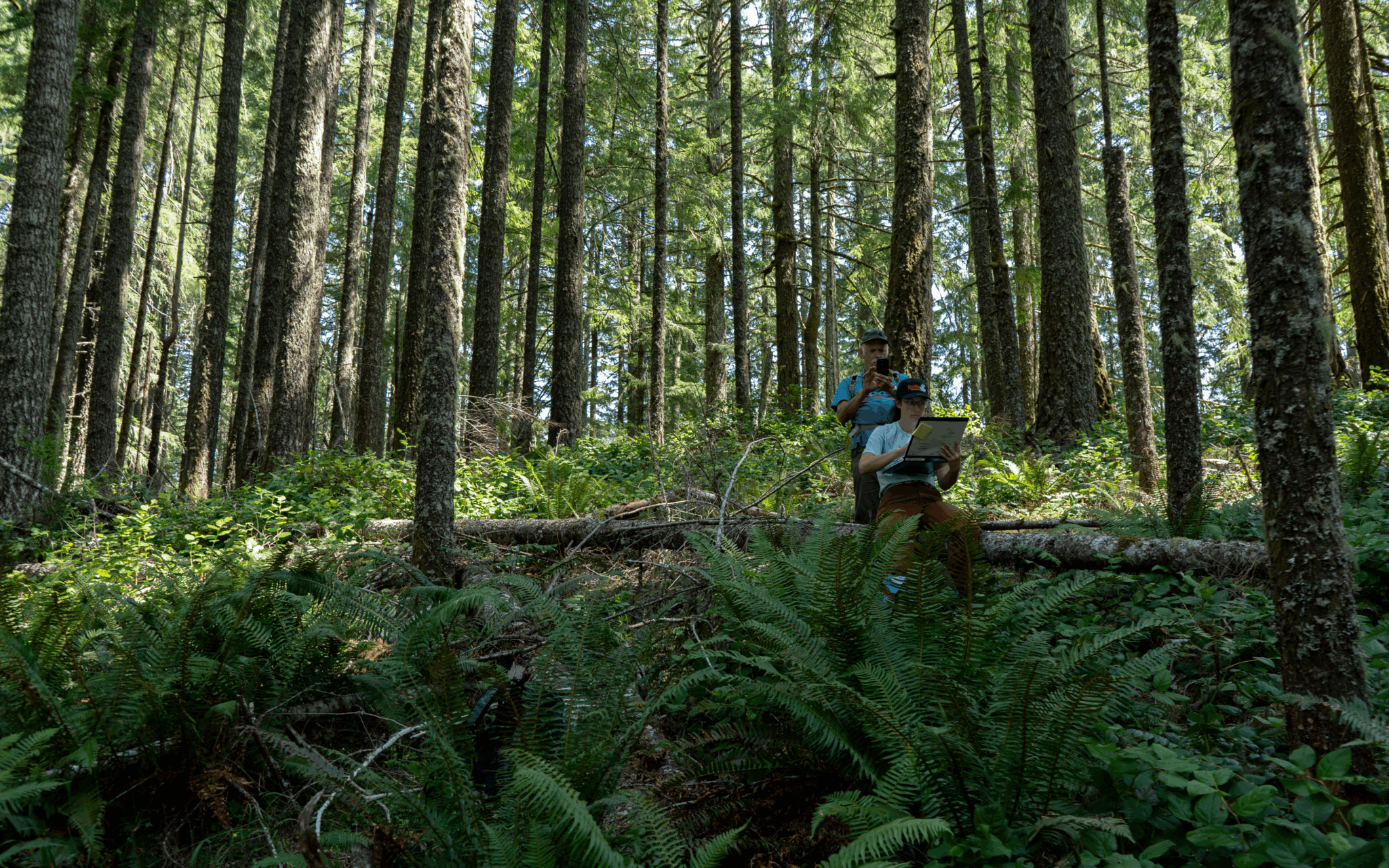
A federal judge has ruled that the Forest Service did not properly analyze the environmental impacts of a proposed 2,100-acre logging project on national forestland in western Oregon, drawing cheers from conservation groups that strongly opposed the project.

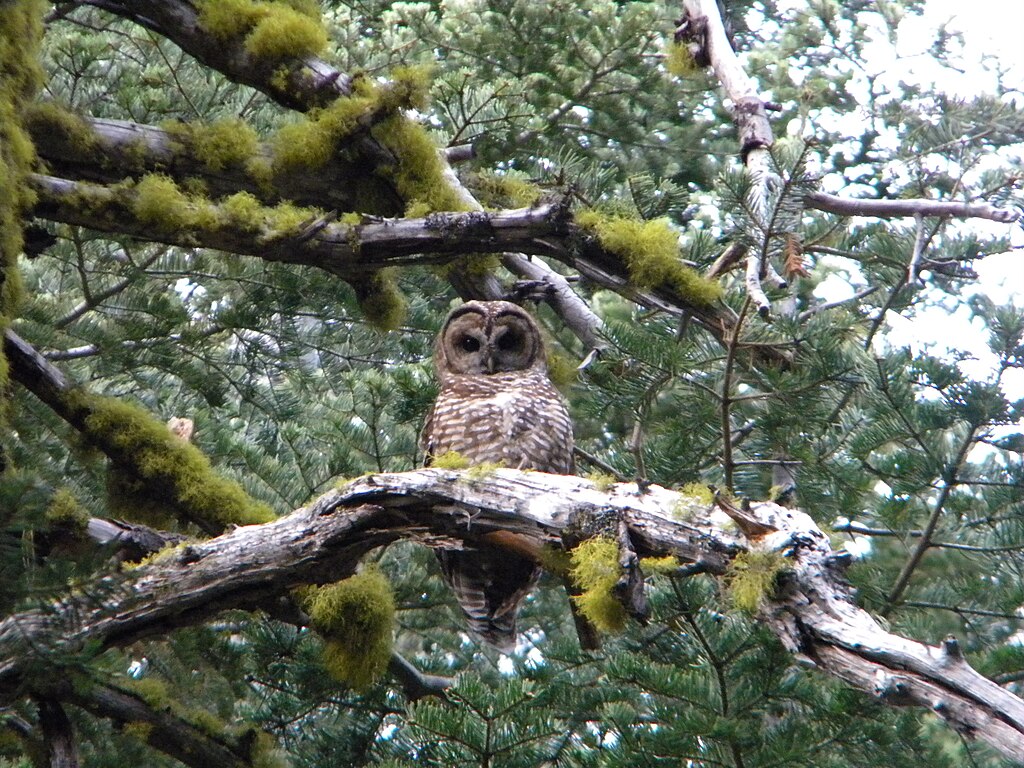
U.S. District Judge Ann Aiken in Eugene, Ore., late yesterday issued a 28-page ruling directing the Forest Service to go back to the drawing board and conduct a full-blown environmental impact statement (EIS) that analyzes the short-term and cumulative impacts of the project on the Willamette National Forest and nearby landscapes, as well as the federally threatened northern spotted owl.

Aiken's ruling was prompted by a lawsuit filed last year by Portland-based Oregon Wild and Eugene-based Cascadia Wildlands that challenged the Forest Service authorization of the Goose logging project. Among other things, the groups argued that the service should have conducted a more detailed EIS and that the environmental analysis the service did conduct inadequately evaluated potential impacts to the forest and sensitive wildlife species, as well as a nearby 9,700-acre area identified as potential wilderness.

Failure to develop an EIS violated the National Environmental Policy Act, the groups claim in the lawsuit. And Aiken agreed in her decision, ruling that "the Forest Service is enjoined from going forward with the Goose Project until an EIS has been prepared."

The two environmental groups and some nearby residents in McKenzie Bridge, Ore., who collected nearly 5,000 signatures opposed to the logging project, hailed the ruling.

"The judge's decision that the Goose logging sale is illegal is vindication for the concerns of local residents and conservationists," said Susan Jane Brown, a Portland-based attorney with the Western Environmental Law Center, which represented the two environmental groups in the case.

"The McKenzie River and surrounding forests is too important to our community, and to the people of Oregon, to allow this kind of unwise logging project to go forward," she added.

It is now up to the Forest Service to decide what to do. The service could appeal the ruling to the 9th U.S. Circuit Court of Appeals in San Francisco; go forward and conduct an EIS, which could take years to complete; or scrap the project entirely.

Larry Chambers, a Forest Service spokesman in Washington, D.C., did not respond to requests for comment this afternoon.

The Forest Service had already entered into contracts with Lyons, Ore.-based Freres Lumber Co. Inc. to conduct the logging work and with Eugene-based Seneca Sawmill Co. to process the timber, said Scott Horngren, a Portland-based attorney representing the two companies.

Freres Lumber and Seneca Sawmill intervened in the lawsuit on the side of the Forest Service.

Horngren said the judge's ruling frustrates his clients.

"We're disappointed with the ruling and that the delay of the several contracts that were sold is going to be a blow to the purchasers of those timber sales," Horngren said.

He said he hopes the Forest Services decides sooner rather than later whether to appeal the court order or conduct an EIS.

Opponents of the logging project hope the project is now dead.

"While there are some restorative components to this project such as thinning in dense young stands, the Forest Service chose to pair them with aggressive logging in mature forest near streams, threatened species habitat and within a potential wilderness area," said Josh Laughlin, campaign director for Cascadia Wildlands. "It is imperative the Forest Service focus on restoring what has been damaged by past mismanagement and abuse and move away from controversial projects that make conditions worse in the forest."

Streater writes from Colorado Springs, Colo.

Mar27

Press Release: Sensitive Wildlife Habitat and Drinking Water Supply Protected Above McKenzie

For immediate release
March 27, 2013

Contact:
Doug Heiken, Oregon Wild, 541.344.0675, dh@oregonwild.org
Susan Jane Brown, Western Environmental Law Center, 503-914-1323, brown@westernlaw.org
Josh Laughlin, Cascadia Wildlands, 541.434.1463, jlaughlin@cascwild.org

EUGENE – United States District Court Judge Anne Aiken has found that the United States Forest Service broke the law in seeking to carry out the controversial Goose logging sale near McKenzie Bridge, Oregon, without a detailed analysis of potential environmental damage.  This logging sale has drawn intense opposition from local residents and landowners concerned about harm to wildlife and nearby streams.  Represented by the Western Environmental Law Center,  the conservation organizations Oregon Wild and Cascadia Wildlands filed a legal challenge against the planned logging in 2012.

“The Judge's decision that the Goose logging sale is illegal is vindication for the concerns of local residents and conservationists,” said attorney Susan Jane Brown of Western Environmental Law Center.  “The McKenzie River and surrounding forests is too important to our community, and to the people of Oregon, to allow this kind of unwise logging project to go forward.”

The judge found that the Forest Service failed to properly analyze the impacts of the 2,100-acre logging project-an area the size of 2000 football fields.  Potential environmental harm includes damage to the 9,700-acre Lookout Mountain Potential Wilderness Area above McKenzie Bridge, and logging within protected stream buffers and sensitive species habitat.

The legal ruling comes on the heels of passionate opposition by members of the local community. Many residents of the McKenzie Bridge area believe they weren't properly notified about the project with some only hearing about it once timber sale flagging was put up adjacent to their properties. Residents have collected nearly 5,000 signatures opposing the logging project.

“We are not opposed to all logging,” said Doug Heiken, Conservation and Restoration Coordinator with Oregon Wild. “But the Forest Service has a responsibility to the American people to ensure that projects like this don't damage fish and wildlife habitat or pollute streams that provide drinking water to our communities.  With the Goose logging project, the Forest Service was clearly on the wrong track.”

The judge also found that the agency failed to fully consider the harm logging in the area could have on threatened wildlife like the northern spotted owl.

“While there are some restorative components to this project such as thinning in dense young stands, the Forest Service chose to pair them with aggressive logging in mature forest near streams, threatened species habitat, and within a potential wilderness area,” says Josh Laughlin with Cascadia Wildlands. “It is imperative the Forest Service focus on restoring what has been damaged by past mismanagement and abuse, and move away from controversial projects that make conditions worse in the forest.”

Conservation groups believe the Forest Service should instead be spending limited taxpayer dollars on projects that restore degraded landscapes, like restoration thinning in young tree plantations formed by past clearcutting, decommissioning harmful roads, and enhancing fish and wildlife habitat. While the Forest Service did analyze an alternative in the Goose project that focused on restoration thinning in young plantations that the organizations supported, the agency instead chose to adopt the much more controversial alternative.

The organizations are  represented by attorneys Susan Jane Brown and John Mellgren at Western Environmental Law Center.

                                                           ###


Mar25

72 Lawmakers Urge Delisting of Wolves Nationwide

E&E Reporter by Phil Taylor

March 25, 2013 

A group of 72 House and Senate lawmakers today asked the Fish and Wildlife Service to remove Endangered Species Act protections for wolves in nearly all of the country, arguing that states are best equipped to manage the species.
 
The lawmakers, almost all of them Republican, told FWS Director Dan Ashe that wolves can be "devastating" to livestock and big-game wildlife, but that state wildlife officials are restricted by law from controlling packs.
 
While wolves have been delisted in Wyoming, Idaho and Montana and in the western Great Lakes, the agency is considering whether to lift protections in the southern Rocky Mountains, the Pacific Northwest and eastern United States.
 
"As you know, state governments are fully qualified to responsibly manage wolf populations and are able to meet both the needs of local communities and wildlife populations," said the lawmakers' letter, which was led by Sens. Orrin Hatch (R-Utah) and John Barrasso (R-Wyo.) and Reps. Cynthia Lummis (R-Wyo.) and Doc Hastings (R-Wash.), chairman of the House Natural Resources Committee.
 
Democrats who signed the letter included Sens. Heidi Heitkamp of North Dakota and Joe Manchin of West Virginia and Reps. Jim Matheson of Utah, Collin Peterson and Tim Walz of Minnesota, and Terri Sewell of Alabama.
 
The agency in February 2012 released a five-year review of wolves that describes ongoing reviews in the Pacific Northwest and eastern United States to determine "which, if any, gray wolves should continue to receive protections under the ESA."
 
Republicans, ranchers and some hunters have long opposed federal protections for wolves, which are blamed for preying on livestock and reducing populations of elk, moose, mule deer and sheep.
 
But environmentalists argue wolves also prevent elk herds from overgrazing Western habitats, leading to regrowth of tree species and songbirds, and are a prime tourist attraction at places like Yellowstone National Park.
 
Today's letter comes weeks after 52 House lawmakers sent a letter to the agency urging continued ESA protections in the Pacific Northwest, California, the southern Rocky Mountains and the Northeast, arguing that federal protections are critical for allowing gray wolves to gain a foothold in new parts of the country.
 
"We are concerned that the same prejudice towards wolves that led to their extirpation across nearly the entire coterminous United States is still present today and, not only is threatening to undo the gains achieved in the northern Rocky Mountains and western Great Lakes, but will prevent their recovery in additional areas," said the lawmakers, most of them Democrats, led by Reps. Peter DeFazio (D-Ore.) and Ed Markey (D-Mass.).
 
Bob Ferris, executive director of Cascadia Wildlands, today said that there is adequate habitat for wolves in Utah, Colorado and the Pacific Northwest and that FWS has no basis for removing ESA protections.
 
But he said the agency put together a draft delisting rule and asked for input, though the proposal is not publicly available.
 
Chris Tollefson, a spokesman for FWS, said the agency has not proposed anything yet. While there is no deadline for issuing a proposal, the agency hopes to have one later in spring, he added.
 

Mar25

Op-ed: Gold Dredging Damages Habitat, Harms Economy

Register-Guard guest opinion by Frank Armendariz and Chris Daughters
March 24, 2013

In his March 10 guest viewpoint, Darold Smith suggests that suction dredge mining benefits endangered fish — but his claims are not supported by science, do a disservice to those focused on recovering our ailing wild salmon populations and offend businesses that rely on Oregon’s clean water for their livelihoods.

In fact, fisheries experts have documented myriad deleterious effects that suction dredge mining has on imperiled fish. That’s why the state of California recently placed a moratorium on the practice, and it’s why the Oregon Legislature is considering how best to safeguard our iconic waterways from this harmful activity. Decisive action to curb this reckless practice would create a lasting benefit for water quality, wild salmon and economic activity in Oregon.

As owners of river-based companies that rely on clean water and healthy fish runs for our success, we are encouraged that the Legislature is considering meaningful action to curb this practice that is fouling our common waterways. In search of gold, suction dredge miners require a noisy, gas-powered hydro pump and hose mounted on a raft. This equipment is used to aggressively vacuum sensitive gravel formations from the bottom of a river.

The river bottom and all the life it houses are passed through a sluice, where any gold flecks settle. The silt, debris and gravel are discharged back into the waterway, creating sediment plumes as long as a quarter-mile downstream. This makes an already compromised situation for aquatic life even worse.

With gold at near-record prices and the moratorium in California in place, a new gold rush is invading Oregon’s iconic waterways, with motorized dredges sucking up and spitting out the river bottoms that are critical to the ecological health of our waterways. Wild salmon strongholds such as the Illinois, Chetco, Rogue and South Umpqua rivers have become ground zero for this destructive hobby — and ironically, these are rivers where millions of dollars of taxpayer money and thousands of volunteer hours have been used to restore wild salmon.

For Smith to suggest that suction dredge mining is beneficial for fish is like saying secondhand smoke is good for your children. The contemporary research suggests that fish mortality occurs from destruction of eggs and fry from the suction process; that spawning habitat is reduced due to sedimentation created from suction dredge plumes; and that invertebrates and bivalves (read: fish food) on the river bottom are violently sucked up and displaced.

Researchers have also documented that suction dredge mining resuspends toxic mercury that settled in our waterways during the original Gold Rush, and that this has a lasting negative effect on the food chain.

Designating new State Scenic Waterways by the Legislature will not just be positive for water quality and salmon, but also for business in Oregon. Our pristine waterways are a gift to our economy that keeps on giving. People from around the world come to catch trout on the beloved McKenzie,­ ride the whitewater of the Rogue, land a salmon on the free-flowing Chetco and camp on the rugged Illinois.

These are the hundreds of thousands of people who fill the coffers of motels and bed-and-breakfast inns, gas stations and grocery stores off the beaten path. And they are the people who help sustain small businesses like ours.

A state of Oregon study recently concluded that outdoor recreation is a $2.5 billion industry in our state and growing. Clean water is big business. Adding to the State Scenic Water­way System will only bolster this impressive statistic.

We are encouraged that legislators like Sen. Alan Bates, D-Ashland, are pursuing a remedy to the destruction of our common waters. Additions to the State Scenic Waterway System will protect many of Oregon’s iconic river systems from harmful suction dredging and safeguard water quality for salmon and future generations. An action like this will pay dividends into the future for river-based business in Oregon and will further the legacy of clean water in our great state.

Frank Armendariz is the owner of River Trail Outfitters in Eugene. Chris Daughters is the owner of the Caddis Fly in Eugene.

Mar20

GE-Free Seafood Campaign Launched

As part of our effort to stop FDA approval of genetically engineered salmon, we are excited to announce we're part of a new coalition asking grocery stores to keep GE fish off their shelves and our plates by joining the Campaign for GE-Free Seafood

We are asking grocery stores, restaurants, chefs and other food companies to sign the pledge for GE-Free Seafood. The pledge simply states they will not knowingly purchase or sell GE salmon or other GE seafood, should it come to market. 

Since FDA won't require GE fish to be labeled, store policies against GE Fish will be the consumer's only way to avoid eating Frankenfish.

The coalition includes thirty consumer, food safety, fishing, environmental, sustainable agriculture, parent, public health and animal welfare organizations. Together we've sent the pledge to the nation's top grocery stores, and will be reaching out to even more.

Results are already pouring in. Some of the biggest stores in the U.S. have already signed on, including Whole Foods, Trader Joes, Marsh Supermarkets, Aldi, and PCC Natural Markets. This represents 2,000 stores accross the country. 

We're not done yet. In coming weeks we'll be reaching out to fish sellers in our local Cascadia bioregion, asking them to sign the pledge.

To make it easier for Cascadians to weigh in on this proposal, we've put together the Cascadia Petition Against Frankenfish, which surveys the good reasons we Cascadians can't abide someone tinkering with our salmon. By adding your name you can take your own personal stand, and bring even more pressure on F.D.A. and the seafood industry. 

Sign the Petition Here.

Mar19

Waldo Lake Bill Advances in Senate

The Register-Guard by Saul Hubbard
March 19, 2013

SALEM – With little discussion, the Senate Environment and Natural Resources Committee on Monday unanimously approved a bill that would ban all gas-powered engines, including seaplanes, on Waldo Lake.

The blanket ban in Senate Bill 602 would directly impact seaplanes, which can now use the waterway, while fortifying the current state Marine Board ban on gas-powered motorboats.

SB 602 now heads to the Senate floor.

The committee did approve an amendment to the bill Monday that allows boats powered by electric motors on Waldo Lake if they stay under a 10 mph speed limit.

But lawmakers rejected a host of other amendments championed by motorboat and seaplane users that would have carved out a variety of other exemptions to the ban.

Sen. Floyd Prozanski, a Eugene Democrat and chief co-sponsor of the bill, said that he is comfortable with the “reasonable” electric motor exception. Proponents of the motor ban had not opposed the provision allowing electric motors.

Electric motors “don’t have the same high-pitched sound” as gas-powered ones, Prozanski said, and don’t present the risk of “fluid leakage” into the lake.

They could provide “accessibility” to the lake “for people who might not be physically able to otherwise,” Prozanski said.

And having the option to use an electric motor could prevent sailboats from getting stranded in the middle of lake, he added.

SB 602 is widely expected to become law this session. A total of 36 lawmakers — or 40 percent of the entire decision-making body — have signed onto the bill as co-sponsors. Gov. John Kitzhaber also supports the motor ban.

If signed into law, the new restrictions will go into effect immediately.

Mar14

Coal Train Slowing at Port?

Eugene Weekly by Camilla Mortensen March 14, 2013 

The recent announcement that two foreign investors have pulled out of the International Port of Coos Bay’s coal export proposal doesn’t mean the coal train plans have been entirely derailed. The announcement leads to even more questions, says Bob Ferris, executive director of Cascadia Wildlands, one of several Lane County groups working to stop the fossil fuel exports. 
 
Objections to the coal trains range from concern over the dust dispersed along the routes as well as the larger issue of feeding global warming-inducing coal plants overseas. “The best use for the deepwater port at the Port of Coos Bay is to export locally produced Oregon goods such as farming produce and timber products,” Lisa Arkin of Beyond Toxics says. She says it is “nefarious” as well as “unsustainable and truly harmful” to mine coal in Montana and haul it through dozens of communities, the Columbia River Gorge, the Willamette Valley and “much of Oregon’s fragile coastline.”
 
According to documents posted on the port’s website in response to a public records request by Oregon Public Broadcasting, both Mitsui, a Japanese company incorporated in New York, and Korean Electric Power Corp. have terminated their agreements with the port. A third investor, Metro Ports out of California, has until March 31 to make a decision, the documents say. 
 
“It seems that Mitsui found that coal exports at Coos Bay doesn’t pencil out economically,” Laura Stevens of the Sierra Club says. “We already know it doesn’t pencil out for our health, environment and local communities all along the rail line.”
 
Ferris says while the Korean power company and Mitsui have not given any reasons for “bailing” on the coal export plan, he suspects it has to do with coal exports being politically unpopular and that the plan will result in legal challenges. 
 
He also says the only reason it has been economically worthwhile for Asia to import coal from 7,000 miles away is because it’s being sold so cheaply. “A buck a ton, you can’t even buy dirt for a buck a ton,” Ferris says.
 
Ferris explains that under the first Bush administration the Powder River Basin was “decertified.” So even though it produces 40 percent of U.S. coal, it’s not considered a coal-producing region and it’s not subject to the same rules and environmental regulations. As a result, the coal is sold for much less. 
 
But Ferris says with Sen. Ron Wyden calling for an examination of the possible millions in royalties lost from the mining of coal on public lands due to out-of-date regulations, he thinks “those two companies saw the writing on the wall.” He also points out that in February Mitsui agreed to pay $90 million for alleged violations of the Clean Water Act in the Deepwater Horizon disaster.
 
Ferris says if the Coos Bay coal proposal to export Powder River Basin coal went through, it would export 10 million tons of coal a year and be giving away something like $50 million in subsidies and natural resources to two foreign companies and competing economies, “which doesn’t make sense.”
 
In addition to Coos Bay, Oregon faces two other coal export proposals in Morrow and St. Helens. Oregon will decide whether it will approve the Morrow Pacific coal project on April 1. For more info go to http://wkly.ws/1fu
 
At 5:30 pm March 14 No Coal Eugene, Oregonians for Black Mesa and other groups will celebrate the investors pulling out of the Coos Bay project upstairs at the Growers Market at 454 Willamette St.
 

Mar06

Oregon Considers Gold Dredge Ban on Salmon Streams

Associated Press by Jeff Barnard, March 5, 2013

GRANTS PASS, Ore. (AP) — The Gold Rush of the 1850s helped settle Oregon, enticing sailors to jump ship and farmers to take a detour from the Oregon Trail.
More than a century later, some state lawmakers want to clamp down harder on modern gold-mining gear known as suction dredges in salmon streams, particularly in southwestern Oregon, where the Gold Rush first struck.

Powered by gasoline engines, suction dredges act like a big vacuum cleaner, sucking gravel off the river bottom and settling out the gold.

Suction dredging permits have doubled from 934 in 2009 to 1,941 in 2012, according to the state Department of Environmental Quality. Sen. Alan Bates, D-Medford, said the idea has been rattling around the Legislature for years, but he became concerned when the number of dredge permits started to approach 2,000.

"What we want to do is not have dredging in sensitive waters for salmon and steelhead rearing," Bates said.

Just what form restrictions would take is under discussion. Bates said an expansion of rivers protected under the Oregon Scenic Waterways Act is one likely method, since the act prohibits mining in protected rivers.

Another could be a moratorium like the one adopted by California in 2009, which sent some miners across the border into Oregon.

"When it comes out, hopefully there will be something to protect the rivers and allow some mining yet in areas we think are safe," Bates said. "We need to get the science right, and we're still gathering that."

Oregon protects 19 segments of rivers as scenic waterways, including parts of the Rogue, Illinois and Klamath rivers, which have long been mined for gold.

One bill, SB401, proposes expanding the scenic waterways list by 31 rivers, including 13 in southwestern Oregon. Among them is Josephine Creek near Kerby, where the discovery of gold in 1851 set off the Oregon end of the Gold Rush.

Another bill, SB115, would prohibit placer mining statewide, leaving open recreational mining with a small dredge. A third, SB370, would require gold dredgers to pay $125 for a commercial placer mining permit, and restrict them to small dredges with hoses less than 4 inches in diameter.

Violations would be a misdemeanor punishable by 30 days in jail and a fine of $1,250.

The proposals have outraged gold miners, scores of whom rallied on the Capitol steps last week in Salem.

"You have the state now trying to pass a law that would prohibit mining on your mining claim (on federal land), which is a taking," said Tom Kitchar, president of the Waldo Mining District outside Grants Pass, who spoke at the rally. "There are numerous court cases that say the states and local governments cannot subvert the federal law.

"As far as I'm concerned, the environmentalists are parasites on society. They produce absolutely nothing," he added. "If (all the bills) passed, we probably wouldn't be able to do anything anywhere. Gold mining has been going on for 5,000 years. You are not going to stop it. They can pass all the laws they want, they are still going to mine. Especially on federal lands."

Salmon advocates have been tightening the screws on gold mining in rivers for decades, citing research that it releases toxic mercury into the water, alters the structure of river bottoms, and produces silt that chokes spawning gravels.

They have had trouble getting new federal river protections through Congress.

"Southwestern Oregon is where we are seeing the most destructive suction dredging activity," said Erik Fernandez of the conservation group Oregon Wild. "It goes back to the heart of this issue being clean water."

Oregon already prohibits suction dredging when salmon and steelhead lay their eggs in the river gravel. The state also sets limits on how much muddy water dredges can produce.
 

Mar05

Press Release: 52 Members of Congress Urge Continued Federal Protections for Wolves in Lower 48 States

For immediate release, March 5, 2013

Contacts:
Noah Greenwald, Center for Biological Diversity, (503) 484-7495
Josh Laughlin, Cascadia Wildlands, (541) 434-1463

PORTLAND, Ore.— In an effort championed by Reps. Peter DeFazio (D-Ore.) and Ed Markey (D-Mass.), 52 House members sent a letter today to the director of the U.S. Fish and Wildlife Service urging an about-face on the agency’s anticipated proposal to remove federal protections for wolves across most of the lower 48 United States.

“We are grateful that these 52 representatives are standing strong for continued federal protections for wolves,” said Noah Greenwald, endangered species director at the Center for Biological Diversity. “With wolves only just beginning to recover in the Pacific Northwest, California, southern Rocky Mountains and Northeast, now’s not the time for the Fish and Wildlife Service to turn its back on wolf recovery.”

An estimated 2 million wolves once roamed freely across North America, including most of the United States. But bounties, a federal extermination program and human settlement drove the species to near extinction in most of the lower 48. While protected by the Endangered Species Act, wolf populations in the northern Rocky Mountains and the Western Great Lakes states increased; but these regions amount to a mere 5 percent of the wolf’s original range, and in other regions wolves are only just beginning to return.

“The job of wolf recovery is far from over and the members of Congress who have written to the Service are asking that science, not politics, guide federal wolf management,” said Josh Laughlin of Cascadia Wildlands. “Maintaining federal protections is critical in allowing wolves to assume their valuable ecological role across the American landscape.”

Since the original wolf recovery plans were written in the 1980s, scientists have learned much more about wolves’ behavior, ecology and needs. Research has shown that returning wolves to ecosystems sets off a chain of events that benefits many species, including songbirds and beavers that gain from a return of streamside vegetation, which thrives in the absence of browsing elk that must move more often to avoid wolves. And pronghorn and foxes are aided by wolves’ control of coyote populations. Protecting ecosystems upon which species depend is a specific goal of the Endangered Species Act — all the more reason for expanded, rather than diminished, wolf recovery efforts.

Bowing to political pressure from wolf opponents, the Service has no plans for wolf recovery in areas beyond those regions it has deemed recovered (the northern Rockies and western Great Lakes). In states where federal delisting has occurred, there are insufficient protections from local pressures to hunt or “control” wolves back to the brink of extinction. In the 18 months since federal delisting began in 2011, more than 1,700 of the 5,000-6,000 recovered wolves in the lower 48 have been killed.

Conservation organizations are hopeful that Interior Secretary nominee Sally Jewell will be a stronger advocate for wolves than outgoing Secretary Ken Salazar, who never called for comprehensive gray wolf recovery across the country.

The Center for Biological Diversity is a national, nonprofit conservation organization with more than 500,000 members and online activists dedicated to the protection of endangered species and wild places.

Cascadia Wildlands is a Eugene, Oregon-based nonprofit conservation organization that educates, agitates and inspires a movement to protect and restore Cascadia’s wild ecosystems.
    

                                                                  ###


we like it wild. Follow us Facebook Twiter RSS