Posts Tagged ‘Washington’

Mar06

Congress Members Seek Continued Wolf Protections

Peter DeFazio » Congress members seek continued wolf protections

Associated Press By John Flesher Mar. 5, 2013 
 
TRAVERSE CITY, Mich. (AP) — Dozens of U.S. House members urged federal regulators Tuesday to retain legal protections for gray wolves across most of the lower 48 states, saying the resilient predator could continue expanding its range if humans don't get in the way.
 
A letter signed by 52 representatives urged the U.S. Fish and Wildlife Service not to drop wolves from the endangered species list in areas where it hasn't already been done. The wolf has been designated as recovered in the western Great Lakes and the Northern Rockies after rebounding from near-extinction in the past century.
 
The comeback is "a wildlife success story in the making," the lawmakers said in a letter distributed by Reps. Peter DeFazio of Oregon and Ed Markey of Massachusetts, both Democrats. But it added that because of lingering human prejudice, "federal protection continues to be necessary to ensure that wolf recovery is allowed to proceed in additional parts of the country."
 
The Fish and Wildlife Service is trying to return wolves to the Southwest, despite court battles and resistance from ranchers. It's also reviewing the status of wolves and their potential habitat in the Pacific Northwest, where perhaps 100 of the animals are believed to roam, and in the Northeast, which has no established population although occasional sightings have been reported.
 
"The outcome of these reviews will identify which, if any, gray wolves should continue to receive protections under the Endangered Species Act outside of the boundaries of the recovered populations and the Southwest population," agency spokesman Chris Tollefson said.
 
A recommendation is expected in the next few months, he said.
 
An agency report last year proposed dropping the wolf from the endangered list in most locations where none are known to exist. In their letter, the lawmakers said that could prevent wolves from migrating to places where they once lived and where enough habitat and prey remain to support them.
 
They noted that lone wolves have wandered into northern California, Utah, Colorado and several Northeastern states. If re-established there, they would help restore ecological balance and boost the economy by drawing tourists, DeFazio said in a phone interview.
 
"I think a heck of a lot of Americans would be thrilled to hear or see a wolf in the wild," he said. "It's part of our natural heritage."
 
About 2 million wolves once lived in much of North America but were all but wiped out in the lower 48 states by the mid-1900s. The areas where they have recovered represent only 5 percent of their original range, said Noah Greenwald of the Center for Biological Diversity.
 

Nov16

USFWS Catch 22: Embrace Flawed and Dated Science or Do the Right Thing for Wolves

By Bob Ferris
 
Catch-22 (Logic)
 
A catch-22 is a paradoxical situation in which an individual cannot or is incapable of avoiding a problem because of contradictory constraints or rules.  Wikipedia
 
In Joseph Heller’s classic book Catch 22 the protagonist was caught between the horns of a dilemma.  He, Captain John Yossarian, was a B-25 bombardier attempting to get out of his service in World War II on the grounds that he was crazy, but if he wanted to leave he was not technically crazy.  Wolf Recovery in the United States is often not that different from a war, and the US Fish and Wildlife Service, like Captain Yossarian, is not to blame for wanting to get out.  However, in order for the US Fish and Wildlife Service to remove itself from wolf recovery and avoid the controversy, they must demonstrate that the wolf is recovered.  There would be no grounds for controversy, if the wolf has truly recovered.  Nevertheless, the US Fish and Wildlife Service is attempting to make this claim, a claim that is not technically or morally defensible and full of Catch 22’s.
 
Catch 22s you ask? Take the Northern Rockies wolf program, for example.  This recovery plan was originally constructed around the concept of recovering a subspecies of wolves.  The recovery area and therefore the recovery goals were predicated on the historic range of this particular subspecies of wolf.   Subsequent morphometric (species determinations derived from skull or body part measurements) and genetic analyses have clouded this once crystal-clear picture from a classic taxonomic tome.  What’s more, the population goals were determined prior to the wide-spread acceptance and use of minimum viable population analyses (MVPs) in looking at recovery goals.  MVPs or population habitat viability analyses (PHVAs) are now commonly used to estimate needed populations.
 
So, if the US FWS is arguing that they have recovered this “subspecies,” then they need to take steps to protect and recover the other subspecies in the Pacific Northwest and the Southern Rockies.  But if they quietly sweep the subspecies argument under the rug and make a “Canus soupus” argument (i.e., wolves are wolves), common sense as well as science would argue that recovery goals would have to be adjusted to reflect the greatly enlarged recovery area, not just the Northern Rockies.  Regardless, nowhere in these scenarios is there a scientific justification for the USFWS to step away from wolf recovery in the Western US.  In short, they like Heller’s Yossarian cannot simply opt out of an unpleasant situation, because they no longer want to be there.
 
Continued federal involvement also makes sense because the threats that led to endangerment—as evidenced by behavior in the Northern Rockies states—has not diminished or been corrected.  Then there is the mobile nature of the wolf and wolf packs which frequently cross state and international borders and spend a good portion of their time on the matrix of federal public lands that dominate the western landscape.  Both these conditions are strong arguments for continued federal oversight and protections.  Add to these two arguments the fact that recovery of the wolf in the West is really a federal public lands issue (please see Oregon, California, and Washington map)
 
But there is another argument here that is rarely raised and that is the question of responsibility and past sins.  The US FWS—through their precursor the Biological Survey—was the agency largely responsible for endangering the wolf in the first place.  Their agents did not stop until wolves were truly and nearly annihilated in the lower 48 states.  This historic exuberance by the agency should be mirrored in recovery.  Brave and innovative wolves are trying diligently to restore themselves to their former haunts in the Pacific Northwest and Southern Rockies and their efforts need to be supported by like courage and adherence to the best available science by the US FWS.  The mission is not yet accomplished.  
 
For all of the above reasons and more, we ask that wolf supporters in the US and elsewhere join with us to send a clear message to the US FWS that the wolf recovery job in the West is not finished.  Federal protections must remain in place and wolves expanding into western Washington and Oregon as well as northern California need and deserve federal protection.  And we feel the same way for wolves recolonizing Colorado and Utah.  Therefore we ask that wolf supporters sign a petition to that effect here.  
 
Thank you.  Working together we can fully recover the wolf in Cascadia and other promising areas.  Pioneering wolves like OR-7, also known as Journey, should not become immediate targets because the road to recovery difficult and political expediency trumps science and compassion.  Let's work for wolves and keeping it wild.


Oct31

Are Cows and Sheep the Sea Urchins of the Cascadian Forests?

By Bob Ferris

I have always liked sea otters—in part—because they are the quintessential keystone species or critters that materially determine some of the character of their habitat for them and others.  And now as new research emerges about the trophic cascade effects (i.e., the side benefits of having top predators present) associated with the otter’s control of sea urchins and the resultant macro-algae (kelp) growth, we also begin to understand that they are effective and needed warriors in the battle against climate change and ocean acidification.   How?  Kelp forests—like terrestrial forests—sequester carbon and CO2 is one of the leading causes of these phenomena affecting our air and seas. 
 
This almost obvious finding leads me to speculate: If urchins need the otter’s controlling influence for us to have robust aquatic forests, what are the terrestrial equivalents?  To begin to answer this question, let’s look at what sea urchins actually do.  Urchins don’t just eat large kelps such as bladder, boa and bullwhip kelp, they destroy the holdfasts which are essentially kelp “roots” and clearcut themselves into the oceanic pastures—known as urchin barrens—they most like to graze.  Urchin dominated “marine-scapes” look like denuded plains.  And without the three-dimensional volume provided by these large and long kelps they lack the structure and escape habitat needed for young fish (including salmon, smelt and rock fish) and a host of other sea life.  They essentially become oceanic deserts—great for urchins but not for kelp forest denizens or overall biodiversity.  
 
Urchin (Noun):
1) A mischievous young child, esp. one who is poorly or raggedly dressed.
2) A goblin.
Merriam-Webster Dictionary
 

When we look at the current and past large grazing guild for Cascadian forests and wildlands we have elk, deer, bison, caribou, moose, big horn sheep, mountain goat and the two new-comers cattle and domestic sheep.  Who are the sea urchins in this equation and why?  Well, deer and elk as well as the other less plentiful native ungulates do not have a history of knocking ecosystems irreparably out of whack—particularly in the presence of wolves and other apex predators.  The same cannot be said, however, of cattle and domestic sheep. 
 
Why are cattle and sheep different?  For one thing it is a numbers and carrying capacity issue.  Cattle and sheep—particularly on public lands—are brought in at and purposely over-stocked at levels that could not be supported year-round.  This bovine and ovine host, therefore, eat more, faster than their natural counter-parts ever could.  They are essentially like the guests who visit in large numbers, eat you out of house and home then move on leaving you starving.  Additionally, they are critters that evolved in the Old World rather than North America in systems more prone to annual plants rather than perennials.  
 
Bison exhibit a stronger preference for the perennial grasses that form the prairie matrix, and they are strongly attracted to open landscapes during the growing season. Cattle include more forbs in their diet, and they use wooded areas and riparian zones more intensively.  From: Comparative Ecology of Bison and Cattle on Mixed-Grass Prairie.
 
Cattle grazing habits and regimes as well as the spread of European annuals through seeds in cattle droppings have altered vegetative make ups.  This annual versus perennial issue is a large one—particularly as we look at carbon sequestration.  Perennials sequester more carbon than annuals because their root structures are more substantial and longer-lasting and more roots in the ground means more below surface carbon.  Add to the root structure loss, the flatulence factor from too many cattle farting methane—a greenhouse gas—by the hot-air balloon full and you have another rationale for adjusting your dietary choices.  
 
And for those thinking that cattle and bison are functionally the same.  The cattle’s use of wooded areas and riparian habitats not used by bison indicates an encroachment into the elk and deer realm and a departure from the co-evolved, ecological niche separation exhibited by the bison.  This direct competition with elk and deer for space and food makes the alliances between hunters groups such as the Rocky Mountain Elk Foundation and Safari Club International and ranchers all the more puzzling as the livestock industry’s interests are clearly in conflict with those of wildlife including game species and fish.  And this further impact on native wildlife species cements cattle and domestic sheep as land urchins.  
 
So what should we derive from all of this?  First, efforts to broaden and emphasize sea otter restoration all along Cascadia should be re-accelerated and expanded particularly along the coasts of Oregon and Washington.  We need also to open our eyes on cattle and sheep grazing—particularly on public lands—and honestly and realistically assess the benefits as well as the full spectrum of implications relating to federal ranching subsidies, wildlife impacts, and compromised ecological services such as clean water and carbon sequestration.  And lastly we need to continue to work towards ecological literacy so that more people come to understand these complex ecological relationships for a host of natural systems and critters from otters to orcas and from wolves to wolverines.  They all help us keep it wild.


Oct01

WDFW and the Wedge Pack—Not a Class Act

By Bob Ferris

People who teach in a classroom understand that the game is won or lost and the tone set extremely early in the process.  Setting and communicating clear boundaries and expectations on that first day of class can help head off problems and save a lot time and energy on corrective actions.  By this measure, the Washington State Department of Fish and Wildlife (WDFW) and their governing commission failed the Wedge Pack and also failed the public who expects that the agency—first and foremost—to protect the interests of the wildlife under their care.

The fact that WDFW field staff seemed unclear about procedures and policies, everyone except gas station attendants appeared to be verifying wolf depredation claims and agency’s strategy of not answering the phone and pretending to not be home when the concerned and angry public called only added to the Keystone Cop-nature of this whole affair.  In short, through all these actions WDFW has seriously lost the public’s confidence and either needs to make some massive changes or find new leaders that can.
 
What kind of changes?  First, the agency has to bend over backwards to rebuild trust with the public and remember that WDFW is in the business of species recovery not looking for ways to placate a recalcitrant and generally uncooperative public lands rancher.  There is another state agency that looks after the rancher very well, thank you.
 
Then WDFW also needs to go back to square one—or day one—in terms of making sure that appropriate expectations are set and the infrastructure is there to forward wolf recovery.  This will be tough because the agency has already shown itself to lack a certain level of gumption when it comes to dealing with the ranching community.  Since the agency has been tested and failed, push back will happen and WDFW will just have to push back harder and stronger.  This probably requires a new team—in short—a new sheriff has to come to town.
 
The public lands grazing aspect of this and the responsibility of leaseholders to undertake preventative measures and practice proactive stewardship may seem like a sideshow, but it is central to the problem.  The cattle industry has occupied the throne on public lands for a long time and many still embrace a romantic view of cowboys—including me occasionally.  But that inertia and those emotions have to be balanced with facts and reality particularly as we look at actions on our public estate.  
 
The last figures I reviewed peg the taxpayer costs of public lands grazing in the West at a cool $100 million annually.  Grazing fees on public lands are much, much lower than those on private.  Add to those costs the environmental impacts of grazing from degraded habitat and water quality that translate directly into fewer elk and deer plus less fish and song birds to diminished recreational opportunities on our wildlands.  I respect and often like ranchers, but in a multi-use setting there can be no kings or fiefdoms and all public lands users have to act responsibly.  And given that hunting, fishing, and wolf-oriented tourism are all economic engines in their own rights, it really begs the question of whether we can or should still treat these lands as some sort of subsidized bovine day care facility for a handful of ranchers.  This needs to be examined fully and acted on.
 
To address the above the agency needs to insist—particularly on public lands—that ranchers make sure they are doing everything possible to stem potential problems.  Conditions have changed with the natural arrival of the wolf and ranchers can no longer expect to just dump their cattle at the beginning of the season and pick them up at the end.  WDFW needs to simultaneously set expectations and also offer training and assistance.  And ranchers need to remember that the original public lands grazing fees were set lower because these were lands where conditions such as predation would be higher.
 
People in Washington State and around the world are deeply saddened by the loss of the Wedge Pack—particularly so—because this was a tragedy that could and should have been avoided.   The agency likely saved themselves from embarrassing court time through some last minute adjustments, but in the court of public opinion the judgment is strongly and painfully against them.  To satisfy that judgment, WDFW needs to remember and be true to all aspects of their mission, vision and goals (see here) and get to the job of recovering wolves, because the “class” is currently out there shooting spit wads and paperclips and it has to stop now.
 
Take action in Washington on October 5th:
 
 
Please See Related Posts:


Sep28

General Response to Joe Greene

[Editor's note: When the New 49er's griped about the bias of scientists involved in the public advisory committee for suction dredging in California, the State eventually acquiesced allowed the New 49ers to invite two people with science degrees from their camp.  They selected Joe Greene and Claudia Wise retired EPA scientists from Oregon and current officers in the Millennium Diggers organization.  These parties were invited by virtue of their positions on the issue rather than their expertise on the topics at hand.  Both have made comments characterizing themselves as "experts" and not initially disclosing their memberships in Millennium Diggers or their participation in or passion for suction dredging.  Ms. Wise has posted few comments, but Mr. Greene has posted numerous comments to both suction dredging posts (Suction Dredging...Sucks and Dredging Up The Truth) requiring a general statement to him personally]

 
Dear Joe,
 
Since I did not mention you by name in my Dredging Up the Truth blog, I can hardly see how my post was a personal attack.  It becomes a personal attack only because you see yourself in those comments.  But since you have opened the door here, let’s play. 
 
Former EPA scientist Joe Greene, an avid gold prospector who has been suction dredging since the 1960s, is less than impressed with the EPA’s propaganda and Tomten’s claim that dredging is illegal under the CWA (see here)
In the first place, certainly I agree with free speech.  I have defended that right my entire life.  But that is separate from the concept of professional ethics.  You have been involved in dredging for nearly 50 years, so you—as a scientist offering scientific opinions—have a huge conflict of interest.  Your access point to this debate is as a suction dredging advocate.  You have crossed a professional line with your comments and attacks on scientist with actual credentials in this field.  But in addition to the concept of professional ethics there is also a question of the extent of your credentials in this specific arena and the quality and thrust of your commentary.  
 
Having worked as an ecological consultant in 1980s—sometimes on fisheries matters—I was often asked to synthesize masses of studies that dealt either directly or indirectly with the species or habitat in question and draw my best conclusions based on the body of work available and those studies that were most applicable.  Where there were conflicts and confusion I had to dig deeper until I felt comfortable with my ultimate conclusion about that element.  A lot enters into this including examining experimental design and dealing with changing evaluation methodologies and scientific standards.  This was the same careful and considered process that was conducted by Dr. Moyle.  His logic was sound and his use of the literature, cautionary remarks, and conclusions were all appropriate. 
 
On the flip side we have you.  I found it interesting that in your initial comments that you made derisive remarks about Dr. Moyle using the work of his former graduate student (i.e., “So, Moyle stated for science he was relying on data published by his former grad student Bret Harvey.  Great move.”)  Using Dr. Harvey’s work in the context of what Dr. Moyle was asked to do was totally appropriate and you should know that.  What was inappropriate was your comment.  It was both disrespectful and incorrect.
 
So let’s deal with the thrust and quality of your work as exemplified by your traveling power point presentation and advocacy.  Words fail me when I look at this.  It is hard to find a single slide in this presentation that is not purposely misleading or dangerously paranoid.  Working for the EPA you should be well aware that there is a difference between sequestered toxics and those re-suspended in the water column—shame on you.  You also know fully well that the arguments about “very little” becomes a big deal when talking about suspended materials and chemicals that are often measured in parts per million.  And your quoting of water chemistry conclusions from a nearly 75-year old study is pretty much laughable—what professional scientist would do that?  Taken in sum, your presentation is deceptive, unprofessional in nature, and politically and personally motivated.  I could do a slide by slide critique but after about slide 40, it makes me sad that you have slipped so low.
 
So Joe, I can absolutely live with disappointment from you.  I might actually wear it as a badge.  And I am glad that you get reinforcement and compliments from the mining community because you certainly will not get them from your former peers or from the scientific community where it actually counts.  I suspect it is also gratifying that your contrarian views and emerging status in the mining community affords you a notoriety that you never enjoyed during your career as a federal bureaucrat—I hope it is worth it.  
 
–Bob Ferris
 
P.S. In terms of your characterization of my qualifications as being non-biological, my undergraduate degree is in Environmental Studies and Biology which means that I completed the degree requirements for both majors.  Moreover, my exit requirement for biology involved being above the 75% mark on the subject GRE which was easy and why I later was accepted into masters and PhD programs.  Much of this is not on my LinkedIn profile because the later 20 years of my career are more relevant.  So I left out paid teaching assignments (not unpaid courtesy appointments) at San Jose State University and UC Santa Cruz (full courses not short courses) as well as my ecological consulting and research experience in the 1980s.  
 

Sep26

Dredging Up The Truth

By Bob Ferris
 
With every complicated, science-based issue we seem to tackle, from climate change to wolves and from forestry to diesel particulates, there seems to be a handful of slide-rule era-educated, contrarian scientists who pull themselves up from the depths of retirement to confuse the issue.  These self-proclaimed mavens generally have some credentials, but not the applicable ones and they tend to be motivated more by self-interests and politics than by science.  And the suction dredging issue is no exception (please see comments section for Suction Dredging…Sucks).
 
Sure, they will be fairly careful in their statements and have the skills necessary to “cherry pick” and present information in a manner that sounds convincing to the lay public, but at the end of the day their arguments are mainly logic wrapped around a kernel of deception.  Here are a few of the myths they try to promulgate and why we all should look deeper for the rest of the story.  See how many of these myths you can spot in the suction dredging comments.
 
There is not a single study that shows that suction dredging kills fish.  This is misleading because the issues are not primarily about adult fish but rather spawning beds, eggs, young fish, food resources, miss-timed disturbance, added stress on heat-challenged fish, and legacy pollution. (Please see California Dept. of Fish & Game, Suction Dredge Permitting Program Literature Review (2009) at 4.3-2 – 4.3-13.)
 
The steelhead runs after Mount Saint Helens broke records.  Steelhead are anadromous fish (i.e., breed in freshwater and grow in the ocean) and were at sea when the volcano erupted. In any case, the success of that record run was determined 3-4 years beforehand by reproductive success in the rivers and streams.  It is not an argument that fish are not affected by silt. (Please see, e.g., Peter A. Bisson, Charles M. Crisafulli, Brian R. Fransen, Robert E. Lucas, and Charles P. Hawkins, Ecological Responses to the 1980 Eruption of Mount St. Helens, 173 (Springer 2005).
 
Turbidity does not harm fish.  While it is fun to use the word turbidity, that is really not the issue—siltation is.  Turbidity—the opaqueness of water associated with suspended particles—can be a minor problem at the wrong time, but siltation (when those particles settle and where) is nearly always a problem. (Please see California Dept. of Fish & Game, Suction Dredge Permitting Program Literature Review (2009) at 4.3-22.)
 
Invertebrate populations rebound quickly after disruption, so it is not a problem.  Young salmon, steelhead, and other fish require invertebrates for food.  Steelhead fry (young fish) are also territorial and defend territories; so they also need those invertebrates in their territory. If food resources are locally damaged for any length of time, that can have detrimental impacts on fry.  And if these young fish have to move to find food, they also become more vulnerable to predation by other fish and birds. (Please see California Dept. of Fish & Game, Suction Dredge Permitting Program Literature Review (2009) at 4.3-10, 4.3-16.)
 
Suction dredgers are good at removing mercury contamination.  Studies indicate that this not an accurate statement.  These studies indicate that suction dredging resuspends sequestered mercury and that discharges from dredges in mercury contaminated areas exceeded legal limits by some 10-fold (see page 8 of the following report)
 
Suction dredging damage mimics annual storm disruption.   This is not true on two fronts. First and most importantly, the timing is off.  Aquatic species in streams and rivers co-evolved with river systems that ran wild during the wetter months and were calm during summer and early fall.  If you alter that pattern, impacts to species whose life cycles have evolved in that system occur.
 
There is also the argument that materials moved are not much relative to the amount of materials moved in association with storm events during the wet seasons for the entire watershed.  In fact, one analysis in California showed that the percentage of materials moved by suction dredging was 0.7 % of that moved by the river naturally.  That is a crafty but disingenuous argument because natural movement is spread throughout the watershed and suction dredging is localized and intense.  In other words, suction dredging may very well not cause much damage relative to total materials moved, but relative to what a particular locale normally experiences, the change can be profound.  This same argument can be made for cyclones (i.e., that they are relatively insignificant to annual winds), but I suspect that the person whose house no longer exists sees the situation very differently.  
 
We clean up gravels and improve spawning areas.  This statement is misleading as several studies have looked at the impact of suction dredge tailings.  And two things become apparent from these studies.  One is that fish tend to not use these tailings when natural spawning habitat is also available.  The second is that when fish used these tailings and the river flows are high, spawning success is reduced (i.e., fertilized and developing eggs are destroyed) because of the instability of tailings as spawning grounds. (See California Dept. of Fish & Game, Suction Dredge Permitting Program Literature Review (2009) at 4.1-4, 4.1-8, 4.3-2)
 
Stopping suction dredging puts Mom and Pop businesses at risk.  As a group, suction dredgers tend to lose money.    When we look at the California experience, suction dredgers on average suffer net losses of from about $5,500 to $9,000 annually to look for gold (please see http://www.icmj.com/UserFiles/file/recent-news/Review-of-Available-Suction-Dredging-Studies.pdf for baseline numbers).  
 
Average California Suction Dredger Gold Recovered 
 
One miner X 35 days per year X $16-$122/per day = $560 to $4,270 per year in gold
 
Average California Suction Dredger Expenses
 
General Expenses per miner = $6,250/year
 
Fuel and Dredge Maintenance = $3,000/year
 
Average Dredge Cost per Miner (average dredge cost $6,000, assume 10-year life) = $  600/year
 
Total expenses per average miner = $9,850/year
 
Crunching these numbers a little more, we see that the total economic activity generated by suction dredging in California came in at about $15-$36 million for everything (e.g., dredge sales, motels, gold recovered, etc.).  While this seems like significant revenue, this pales in comparison to recreational fishing which is a $2 billion plus industry embedded in the $2 trillion California economy.  
 
This is certainly not the economic engine that proponents argue, and California was absolutely their best case scenario.  Moreover, it is not appropriate to characterize all of this as potentially lost economic activity, as this sector of the public will likely shift their expenditures to other similar recreational endeavors.  
 
When dealing with endangered and declining aquatic species found in public waterways and surrounded by public lands, we fully agree with Dr. Peter B. Moyle’s view (please see http://www.klamathriver.org/Documents/Peter-Moyle-Expert-Report-on-Suction-Dredging-on-Klamath.pdf) that the burden absolutely needs to be on the suction dredging industry to demonstrate through independent science that they will not harm these species, either directly or indirectly.  Instead, the industry’s strategy has been to malign dedicated experts, discount evidence as rumor, and attempt to confuse the public on the science.  I suppose it is much easier and more profitable to sell dreams of riches to the vulnerable members of society, than it is to deal with reality and science.  
 
Please sign and share our petition.
 
And please read:


Sep17

Suction Dredging…Sucks

By Bob Ferris
 
My access point to my career in the conservation field came originally from fish.  I caught my first trout on the Eel River in northern California while my family was on their way to visit the 1962 World’s Fair in Seattle.  As we were on our way north, my mother grudgingly allowed me to fish for 15 minutes—no more.  And on my premier cast with my older sister’s telescoping metal pole and an ancient JC Higgins reel, I felt that first electronic jolt that changed my life.  (Yes, this was a salmon egg catch, but I did not know any better at the time.)
 
That memory is golden to me and the thought of anyone taking any action that would rob someone of a similar moment rankles me no end.  That’s why the notion of some yahoo sticking a 4”-6” inch motor-driven suction hose into the hard bottom or gravel of a trout or salmon bearing stream and muddying the water literally makes me just a little angry.  And that ire only rises a little higher when I learn that these “modern 49ers” seeking flakes of gold in the silt they are spraying around are being egged on and legislatively supported by some modern day equivalent of snake oil salesmen hitting the KA-CHING button with each $8900 suction dredge they sell.  
 
It’s an old game where the “pick and pan” salespeople make the real money preying on the suggestible and greedy.  And part of the pitch seems to be that mucking up rivers flowing through public lands is an honest-to-goodness, Don’t-Trend-On-Me, All-American right.  Poppycock!  Suction dredging sucks and the sooner we all gravitate to that point of view, the better for all concerned.  (Okay so the dredge dealers will not be happy, but I can live with that quite comfortably, Thank You.)
 
Doing the “gold fever” math: Proven placer claims yield in the vicinity of 0.025 ounces per yard of material processed or roughly $45 per yard.  Recreational suction dredgers can move up to 25 cubic yards per year before being classified as commercial operations.  So if they are lucky and gold prices hold they can gross $1125 annually in Oregon.  When the cost of the machine and gear as well as other costs such as permitting, trailer registration, gas, and maintenance are factored in it becomes crystal clear that the “gold strike” here is for the equipment sellers rather than these hopefully prospectors.   
 
Suction dredging is not a “right” nor is mucking up the water for the rest of us—particularly in streams and rivers that run though public lands or hold imperiled species such as Coho and Chinook salmon or bull trout.  We and many others who have worked hard to clean up and protect waterways throughout Cascadia see only one solution to this issue:  An all-out ban on suction dredging in the salmon-bearing water systems of Cascadia.  The practice is banned in California and restricted in Washington, Oregon, Alaska, and Idaho.  We think it is high time that all of us who would like to see the return of vibrant salmon and steelhead speak up on this issue with one voice.  
 
Please check out our suction dredging and high banking page, sign our petition to the governors of Oregon, Washington, Alaska, and Idaho, and pass this all along to others 
 

Sep11

Wolves’ Return Displeases Some Hunters, Farmers

September 9, 2012, 12:01 a.m.

By Bill Sheets, Herald Writer
 
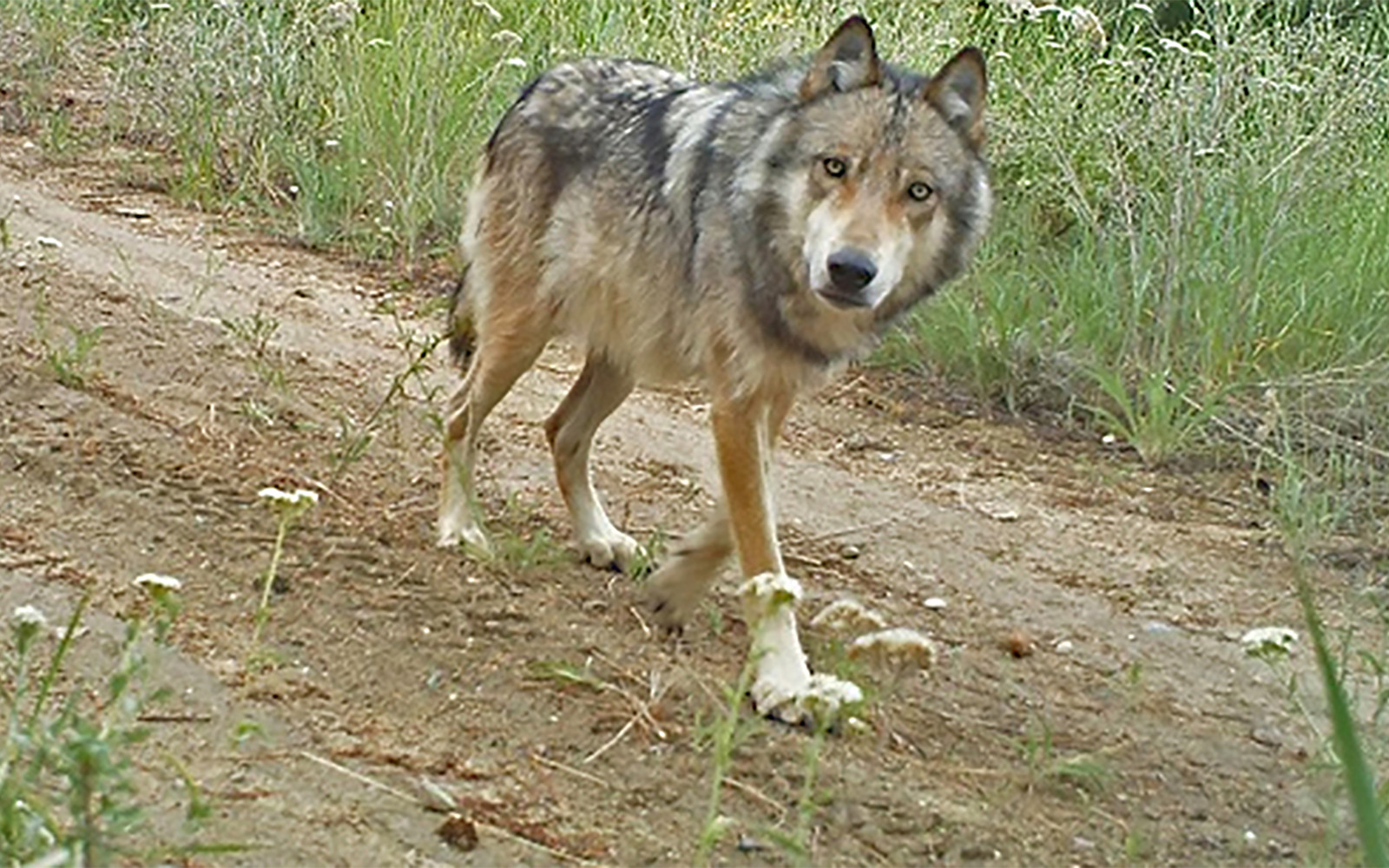
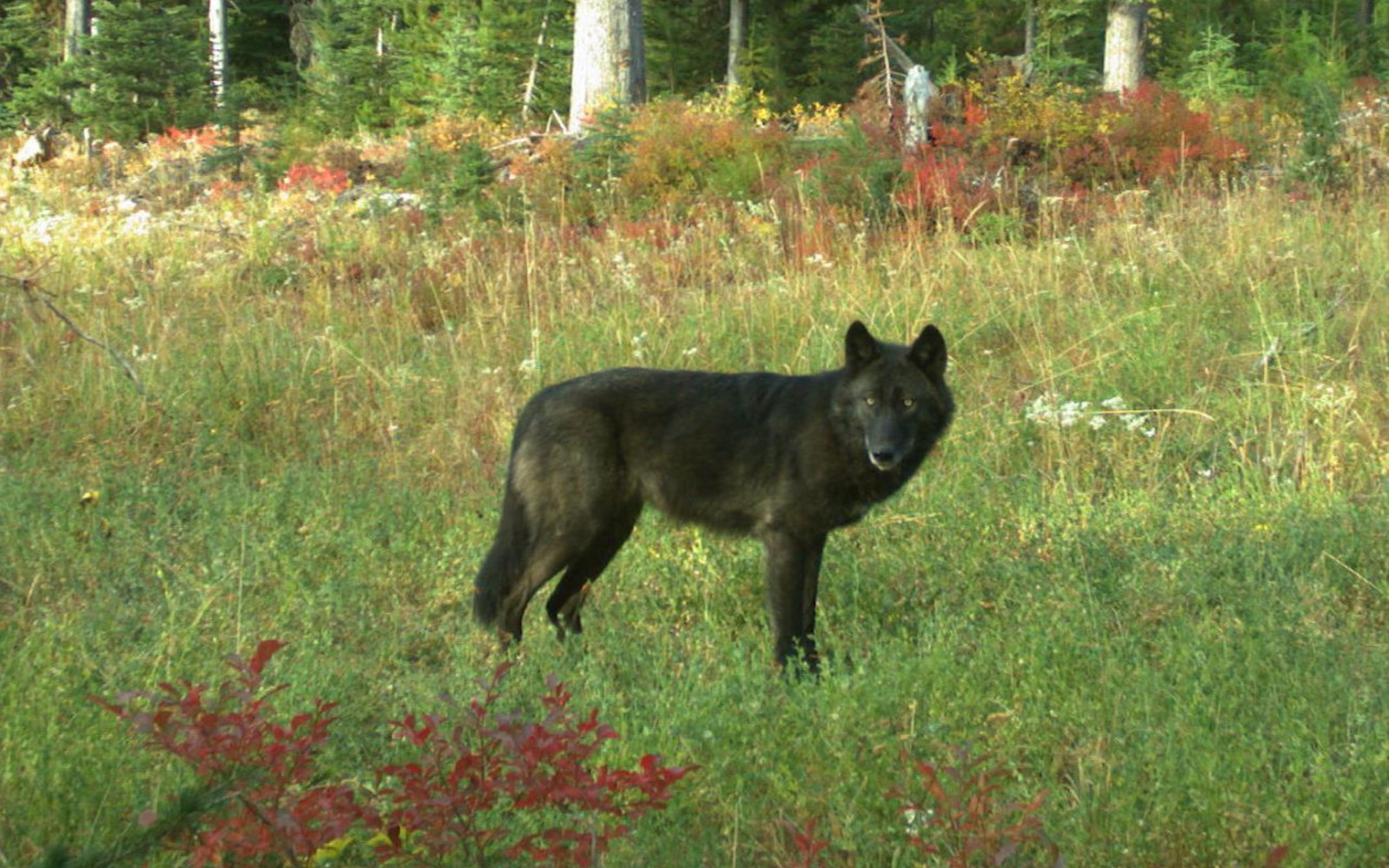
Gray wolves, also known as timberwolves, were once nearly hunted out of existence in the 48 contiguous United States but are bouncing back. Their numbers have grown from less than 700 in 1960 to more than 6,000 at the end of 2010. Currently there are an estimated 25 to 30 in Washington, in the eastern part of the state and the Cascade Mountains.
 
National Park Service Conservationists applaud the continued recovery of the gray wolf, saying its helps restore a natural balance to the ecoysystem, while hunters and farmers in Eastern Washington and Idaho say wolves are attacking livestock and depleting elk populations in some areas. State wildlife officials killed a wolf last month in northeastern Washington after an apparent attack at a cattle ranch there.
 
U.S. Fish and Wildlife Service An endangered gray wolf peers out from a snow covered shelter. Conservationists applaud the continued recovery of the gray wolf, saying its helps restore a natural balance to the ecoysystem, while hunters and farmers in Eastern Washington and Idaho say wolves are attacking livestock and depleting elk populations in some areas. State wildlife officials killed a wolf last month in northeastern Washington after an apparent attack at a cattle ranch there.
 
U.S. Fish and Wildlife Service This undated handout photo provided by the U.S. Fish and Wildlife Service shows a gray wolf. Gray wolves, also known as timberwolves, were once nearly hunted out of existence in the 48 contiguous United States but are bouncing back. Their numbers have grown from less than 700 in 1960 to more than 6,000 at the end of 2010. Currently there are an estimated 25 to 30 in Washington, in the eastern part of the state and the Cascade Mountains.
 
Gray wolves, once completely wiped out in the state, are back and their numbers are growing.
 
Conservationists applaud the development, saying it will help restore balance to the ecosystem and preserve a native species that hunting and trapping nearly eliminated in the contiguous 48 states.
 
Others, particularly hunters and farmers, aren't so happy about the wolves' resurgence. State wildlife officials recently killed one wolf in Eastern Washington for attacks on livestock and plan to kill four more.
 
Hunters blame the wolves for drops in the elk population in Idaho and say the same could happen here.
 
"They're a predatory animal and they follow the meat, and when it runs out they're going to keep following," said Curt Low of Arlington, an Everett fire captain who hunts deer and elk near Ellensburg.
 
"It'll happen everywhere unless they make a change."
 
Wolves were spotted in Washington in 2005 — the first documented sightings in the state since the 1930s. 
 
Wolf populations are healthy in Canada, according to the International Wolf Center, an education group based in Minnesota. The animals have rebounded strongly in Idaho, Montana and Wyoming. In recent years, some of these wolves have migrated from the north, east and southeast to Eastern Washington and the Cascades, state wildlife officials said. No wolves have been imported or reintroduced into the state, they said.
 
It's possible wolves could migrate to Snohomish County, though state officials say it's difficult to predict when, or even if, this will occur.
 
"We are at early stages of wolf recovery," said David Ware, game division manager for the Department of Fish and Wildlife. "Therefore dispersal and establishing new packs is at a slow pace."
 
One of two confirmed packs in the Cascade Mountains is located perhaps 50 miles from Gold Bar: wolves from the Teanaway pack roam between Cle Elum and Wenatchee. At the end of 2011, there were three adults and four pups in this pack, according to the state.
 
The other Cascades pack, the Lookout pack, is centered in the Methow Valley area of Okanogan County. This was the first in the state to be confirmed as a pack, in 2008. Since then, the number of packs has grown quickly with most located in the northeastern corner of the state. There are now eight confirmed packs and four other areas in which packs are believed to live, containing a total of 25 to 30 wolves, according to the state Department of Fish and Wildlife.
 
Poaching reduced the Lookout Pack from 10 wolves in 2008 to two or possibly three animals, wildlife officials have said. Three members of a Twisp family pleaded guilty in April to charges related to killing endangered wolves and attempting to smuggle a wolf hide to Canada. They face fines of more than $70,000.
 
A few solitary wolves have been seen in other parts of the state, though none have been reported in the Cascades outside the two packs, said Nate Pamplin, assistant wildlife director for the department.
 
A pack is defined as containing at least one breeding pair raising two or more pups through the end of a calendar year. 
 
Jack Field, executive vice president of the Washington Cattlemen's Association in Ellensburg, says the Teanaway pack could easily move west.
 
"The wolves from the Teanaway pack in King County could be in Snohomish County (in two days) without any problem," he said.
 
Field said he hasn't heard any specific concerns from Snohomish County farmers about wolves, but he said if livestock are preyed upon while the wolves are still listed as endangered, not much can be done because the wolves can't legally be killed.
 
Field believes lethal measures are the only ones that work, especially in remote, rugged areas where fencing, lighting and penning aren't always practical.
 
"It's a rugged forest grazing environment," he said.
 
In Washington, wolves are protected under the federal Endangered Species Act in the western two-thirds of the state. In Eastern Washington, where numbers have grown in recent years, wolves have been removed from the list. They are now managed under a conservation plan by the state Department of Fish and Wildlife. The department created a management plan last year that aims for continued recovery of the species while providing for ways to prevent or address problems caused by wolves preying on livestock or wildlife. 
 
"Wolves are a part of Washington's wildlife heritage," according to a statement on the department's website. The Legislature requires the department "to preserve, protect and perpetuate all of the native wildlife of the state."
 
Wolves help keep elk, deer and moose populations under control, state officials say. Wolves prey on smaller animals, such as rabbits, as well.
 
"As with other predators, such as cougars, bears, and coyotes, wolf-prey balances are maintained over time, with highs and lows in populations of both," according to the statement.
 
For gray wolves to be removed from the endangered species list, the state has set a goal of 15 confirmed breeding pairs, or packs, to be established for at least three years and distributed evenly throughout the state.
 
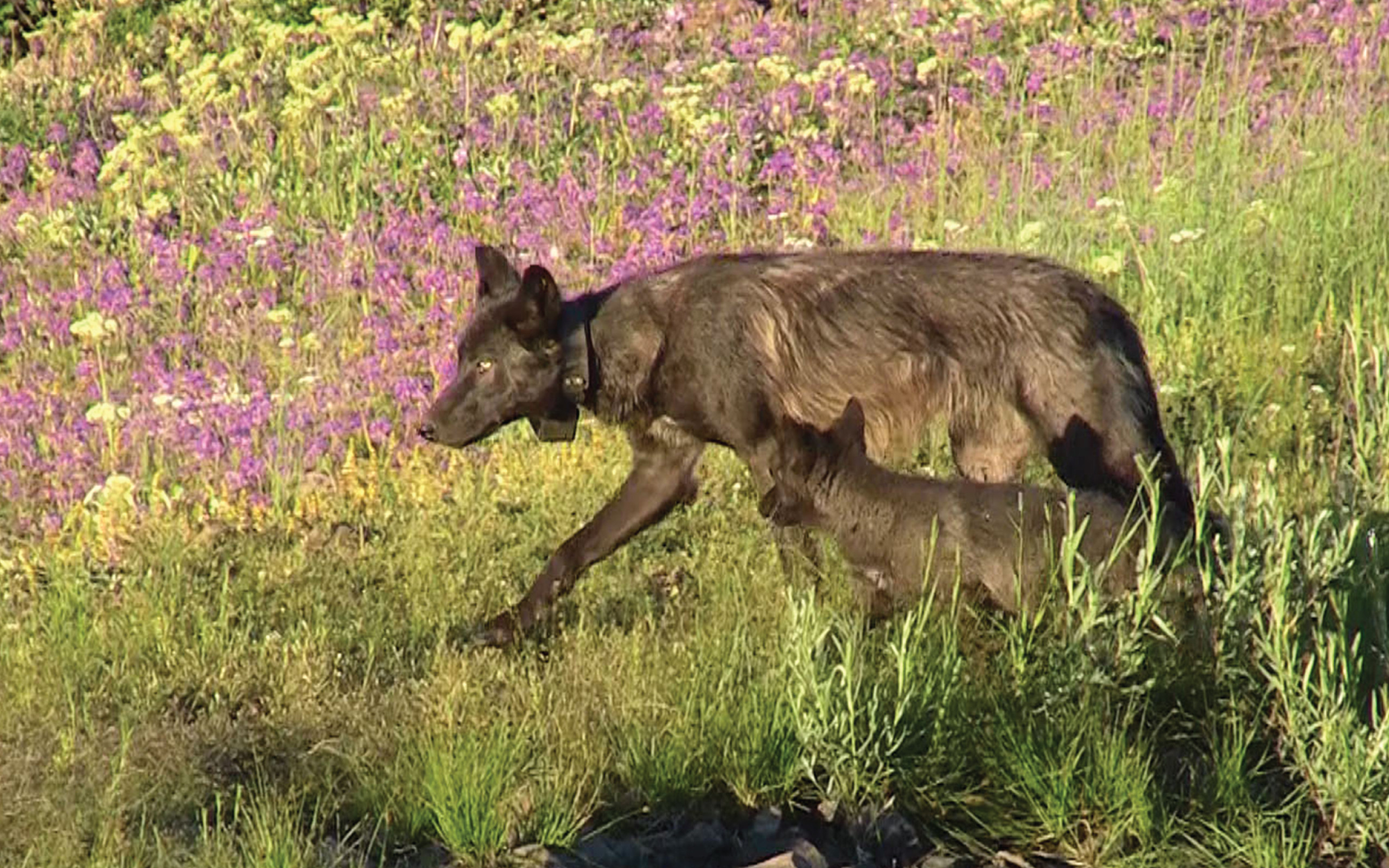
Non-lethal measures should be used first to deter wolves from killing livestock, according to the plan. These include fencing, keeping animals penned in at night, patrols and tracking wolves with radio collars.
 
The plan for wolves in Eastern Washington does allow for killing of wolves, however, if they're found to be preying on livestock and other measures have failed.
 
The state has done just that in northeastern Washington. Officials shot a wolf Aug. 7 after one calf at the Diamond M ranch in northern Stevens County was killed and several other cattle injured in attacks in July. Wildlife officials now say they plan to kill four more wolves after two more livestock deaths were reported this week at the same ranch. Those deaths are now being investigated.
 
Wildlife officials determined the July attacks were made by wolves from a pack nearby. Ranchers in the area had reported possible attacks on their livestock beginning in 2007.
 
The goal was to reduce the size of the pack and break the pattern of wolves preying on livestock.
 
"We can't guarantee that (the) action will prevent future attacks by this pack, but we have clear indications that non-lethal actions alone are unlikely to reduce predation on livestock," Pamplin said.
 
Conservationists don't believe the kill was warranted. They say there was insufficient evidence to show the attacks were by wolves. Representatives of seven different conservation groups signed a letter sent to Gov. Chris Gregoire protesting the kill.
 
"This is a simple case of the state not following its own rules," says Bob Ferris, executive director of Cascadia Wildlands, based in Eugene, Ore.
 
Wolves can have an effect on wildlife as well.
 
Larry Taylor of Arlington, who has been hunting in Idaho for more than 20 years, said he and other hunters are convinced the increase in wolves is responsible for sharp drops in the number of elk in some areas.
 
In 1995 and 1996, the U.S. Fish and Wildlife Service released 35 wolves into central Idaho. After this, Taylor, 74, said he noticed a decline in the elk population. There are now more than 800 wolves in Idaho.
 
The wolves "have pretty much killed the elk, they're working on the deer and the moose," he said. He used to see up to four moose per year on his hunting trips, and now "I haven't seen a moose in three years."
 
In Idaho, a hunter may apply for a permit to kill up to five wolves per year. Idaho has set a goal of 500 wolves for the state, the level from 2005 — the same year that saw a sharp rise in the number of wolf attacks on elk herds and domestic livestock, according to a 2010 report by the Idaho Fish and Game Department.
 
Still, other factors have affected elk populations as well, such as hunting, drought and harsh winters, according to the report.
 
In some parts of the state, elk are thriving. Overall, the elk population has dropped from 125,000 when wolves were introduced in the mid-'90s to 100,000 today, the report states.
 
Hunters such as Taylor and Low believe wolves will multiply in Washington as they did in Idaho.
 
"There's no way you can get rid of them now," Low said.
 
If wolf populations increase enough to be removed from protected status, and if they're causing problems for livestock or wildlife, then the state could establish a wolf hunting season and limits as is done in Idaho. If wolves multiply to this point, then the state plan calls for them to be managed as a game species, Ware said.
 
Conservationists say the whole ecosystem needs to be taken into account with regard to wolves.
 
Predators such as wolves weed out sick and weak animals, strengthening the stock for deer and elk, conservationists say. 
 
"Having wolves will make a positive difference for everything, from healthier game populations to a better salmon habitat," said Mitch Friedman, executive director of Conservation Northwest in Bellingham. 
 
If elk have too few predators, they tend to stay near streams and eat down the vegetation, damaging the habitat for salmon, according to Friedman. This has happened along some rivers on the Olympic Peninsula, he said.
 
There's no evidence to suggest that wolves alone will decimate deer and elk populations, said Ferris of Cascadia Wildlands.
 
"They never have (done so) in their history of their coexistence, so why would we expect to see that happen now?" he said. To blame wildlife population declines solely on the wolf "is not a robust way of looking at it."
 
"Wolves belong here," Friedman said. "Top level predators like wolves play an essential role in how nature functions." 
 
The Associated Press contributed to this story.


Aug30

Press Release: Washington Wolves Get Temporary Reprieve From Kill Order

For Immediate Release, August 30, 2012

Contact: Tim Ream, Center for Biological Diversity, (541) 531-8541
Bob Ferris, Cascadia Wildlands, (541) 434-1463
 
Washington Wolves Get Temporary  Reprieve From Kill Order
State Asked to Cancel Kill Order Permanently
 
OLYMPIA, Wash.— Following more than a week of pressure from conservation groups and thousands of members of the public, the Washington Department of Fish and Wildlife has temporarily called off the killing of up to four wolves in the Wedge pack in the northeastern part of the state.
 
“We’re thrilled state officials heard our concerns and gave these wolves a reprieve,” said Tim Ream, staff attorney with the Center for Biological Diversity. “The Washington Department of Fish and Wildlife should never have ordered the killing of endangered wolves based on questionable information and improper standards — we hope very much that the kill orders will be permanently rescinded.”
 
The controversy began Aug. 17 when the state’s wildlife department announced it intended to kill up to four young wolves in an attempt to stop what it alleged was a pattern of livestock predation by the Wedge pack. According to the agency’s own reports, however, it is not clear that wolves were involved in several of the instances where livestock were injured or died. Still, the state relied on those faulty reports to order the killing of the wolves.
 
An Aug. 16 field investigation of a dead calf found no evidence of obvious bite or scratch marks to the hide and no evidence of wolf tracks or scat near the dead calf, leading two outside experts to conclude that wolves’ involvement was questionable. One of the experts observed that “the apparent injuries to the calf appeared superficial and that if a wolf killed it, the wolf would have had more gums than teeth.”
 
“Washington’s wolf-management plan makes clear wolves cannot be killed until specific criteria have been met,” said Bob Ferris (see blog), executive director of Cascadia Wildlands. “In this case, the criteria have clearly not been met, and the wolf that has already been killed should not have been.” That wolf was a female member of the Wedge pack, shot by state wildlife agents on Aug. 7.
 
In addition to documenting that wolves have clearly killed livestock, the department is also required to document that nonlethal measures to prevent depredations have been attempted and that unnatural attractions, like bone piles and carcass piles common to some ranching operations, were not present. None of the depredation reports provide any documentation of nonlethal measures taken to resolve the situation, nor have requests to the department produced any documentation.
 
Last week seven groups sent a letter to the department outlining these shortcomings, and thousands of concerned Washingtonians flooded the governor’s office with phone calls. On Wednesday, State Senator Kevin Ranker sent the state wildlife agency a letter expressing similar concerns.
 
This pack is known as the Wedge pack because its range includes a triangle-shaped area defined by the Canadian border and the Kettle and Columbia rivers. The alleged incidents took place on public land leased for grazing within the Colville National Forest.
 
Wolves are just beginning to make a comeback in Washington after a government- sponsored program of poisoning, shooting and trapping the animal to extinction in the state. There are currently eight packs of wolves in Washington since the animal’s return in 2008. This past December the Washington Fish and Wildlife Commission adopted the “Wolf Conservation and Management Plan for Washington,” a stakeholder-developed framework that outlines recovery and management objectives for the state’s wolves.
 
The groups calling for a more thorough investigation of the alleged wolf incidents include Cascadia Wildlands, the Center for Biological Diversity, Defenders of Wildlife, Humane Society of the United States, Snohomish Group of the Sierra Club Washington State Chapter, Western Environmental Law Center and Wolf Haven International.
 
###
 

Aug24

State of Washington Urged to Halt Wolf Killing: Evidence Lacking That Wedge Wolf Pack Is Responsible for Livestock Loss

For Immediate Release, August 24, 2012

Contact: Bob Ferris, Cascadia Wildlands, (541) 434-1463
Noah Greenwald, Center for Biological Diversity, (503) 484-7495
Suzanne Stone, Defenders of Wildlife, (208) 861-4655
Greg Costello, Western Environmental Law Center, (206) 260-1166
 
OLYMPIA, Wash.— Seven conservation organizations sent a letter today calling on Washington Gov. Christine Gregoire and state agencies to rescind an order to kill four wolves in the Wedge wolf pack in northeastern Washington. The kill order comes just two weeks after the state killed another wolf-pack member. State agents have been dispatched and are currently in the field tracking down the wolves to kill.
 
The letter was sent by Cascadia Wildlands, Center for Biological Diversity, Defenders of Wildlife, Humane Society of the United States, Snohomish Group of the Sierra Club Washington State Chapter, Western Environmental Law Center and Wolf Haven International. The groups assert that the state’s plan to kill the four wolves is illegal because the state has failed to show that the livestock were killed by wolves or that the ranchers took actions to avoid depredations. 
 
“This is a simple case of the state not following its own rules,” says Bob Ferris, executive director of Cascadia Wildlands. “You can’t kill four more members of the pack if you can’t show conclusively that wolves were responsible for the livestock deaths.”
 
There is a strict standard in the recently adopted “Washington Wolf Plan” about when lethal control on wolves can be authorized, including demonstrating that the livestock at issue “have clearly been killed by wolves.” A state of Washington incident report about a recent depredation near the Diamond M Ranch specifically concluded that the incident could not be confirmed as a wolf predation. 
 
“The killing of five wolves in the Wedge pack would completely violate both the spirit and letter of the state’s wolf-management plan,” said Noah Greenwald, endangered species director with the Center for Biological Diversity. “The state needs to rescind this kill order right away and pull its staff from the field.” 
 
Several wolf-depredation experts have reviewed the state’s investigation reports and found that none of the injuries are characteristic of wolf predation on livestock. 
 
“The rush to kill these wolves based on misidentified predation sets a very dangerous precedent for wolf management in Washington,” said Suzanne Stone, northern Rockies representative for Defenders of Wildlife, who managed the organization’s regional wolf-compensation program from 1999 to 2011. “Instead of waiting for legitimate depredations to occur, the state should focus on using proven nonlethal alternatives that are much more effective at reducing conflicts over the long run. People will never learn how to coexist with wolves if the state is so quick to kill them.”
 
This pack is known as the Wedge pack because its range includes a triangle-shaped area defined by the Canadian border and the Kettle and Columbia rivers. The incidents have taken place on leased grazing land within the Coleville National Forest.
 
“Managing the return of wolves to our public landscape is an emotional issue, and the state will always be pressured to take extreme control measures when livestock are killed regardless of whether a wolf was responsible or not,” said Greg Costello with the Western Environmental Law Center. “Therefore, it is imperative that the state’s integrity is maintained during the wolf recovery process to ensure fair and transparent decision-making.”
 
Wolves are just beginning to make a comeback in Washington after a government-sponsored program of poisoning, shooting and trapping the animal to extinction in the state. There are currently eight packs of wolves in Washington since the animals’ historic return in 2008. This past December the Washington Department of Fish and Wildlife Commission adopted the “Washington Wolf Plan,” a stakeholder-developed framework that outlines recovery and management objectives for wolves in Washington. 
 
###


we like it wild. Follow us Facebook Twiter RSS