Posts Tagged ‘Washington Department of Fish and Wildlife’

Apr29

Reasonable People Can Disagree, but…


By Bob Ferris

“Reasonable, even intelligent people can, and frequently do, disagree on how best to achieve peace in the Middle East, but, peace must be the goal of our foreign policy tools, whether they be by the stick or by the carrot.” Nick Rahall Congressman from West Virginia
 
I have always liked the above quote because I think it is transferable to a lot of other issues.  In this instance, I am thinking about the wolf.  Reasonable, intelligent people can and often do disagree on the best pathways for wolf recovery.  All things being equal I have found that people’s reasonableness will win the day—when that reasonableness is honest and is allowed to flourish. 
 
The problem when we try to apply this approach to wolves in Eastern Washington and this recently rushed through “emergency rule” is that we are not always dealing with reasonable people.  And even if those people started out reasonable, anti-wolf forces are working overtime to make them less so.  
 
Northeast Washington-based hunting guide Dale Denney had similar suggestions on how conservationists could meet hunters halfway: “Learn to accept the fact that wolves need to be managed (especially problem wolves) if you ever want the public to accept them. Pro-wolf groups also need to promote responsible management of problem wolves and agree with wolf numbers that fit into our modern ecosystems without upsetting the balance that has been established over the last 100 years. Many hunters would be more acceptable to a moderate number of wolves established slowly rather than imposing unregulated numbers of wolves and preventing management.”  Quoted in Conservation Northwest’s Fall 2012 Newsletter
 
The above quote seems reasonable and paints Mr. Denney of Bear Paw Outfitters in a reasonable and open light until you realize that Mr. Denney is also the owner of the website Washington Wolves which is packed chock-full of anti-wolf rhetoric, untruths and fear mongering.   
 
“[Wildlife] Commissioner Chuck Perry of Moses Lake said he was a little concerned about the limit of killing one wolf, because they are pack animals.” (see here)
 
Moreover, this emergency rule—even if people are reasonable and responsible—lacks the appropriate conditions or sideboards to prevent abuse.  Where in here are requirements for pro-active preventative measures such as range riders or fladry prior to allowing citizen control of a state endangered species? And where are the prohibitions about attractive nuisances such as carcasses or bone piles? 
 
All we see here in this emergency rule is a wildlife agency continuing to act like an agricultural department and setting of the stage for another Wedge Pack disaster.  Only this time everyone will get to participate.  


Oct01

WDFW and the Wedge Pack—Not a Class Act

By Bob Ferris

People who teach in a classroom understand that the game is won or lost and the tone set extremely early in the process.  Setting and communicating clear boundaries and expectations on that first day of class can help head off problems and save a lot time and energy on corrective actions.  By this measure, the Washington State Department of Fish and Wildlife (WDFW) and their governing commission failed the Wedge Pack and also failed the public who expects that the agency—first and foremost—to protect the interests of the wildlife under their care.

The fact that WDFW field staff seemed unclear about procedures and policies, everyone except gas station attendants appeared to be verifying wolf depredation claims and agency’s strategy of not answering the phone and pretending to not be home when the concerned and angry public called only added to the Keystone Cop-nature of this whole affair.  In short, through all these actions WDFW has seriously lost the public’s confidence and either needs to make some massive changes or find new leaders that can.
 
What kind of changes?  First, the agency has to bend over backwards to rebuild trust with the public and remember that WDFW is in the business of species recovery not looking for ways to placate a recalcitrant and generally uncooperative public lands rancher.  There is another state agency that looks after the rancher very well, thank you.
 
Then WDFW also needs to go back to square one—or day one—in terms of making sure that appropriate expectations are set and the infrastructure is there to forward wolf recovery.  This will be tough because the agency has already shown itself to lack a certain level of gumption when it comes to dealing with the ranching community.  Since the agency has been tested and failed, push back will happen and WDFW will just have to push back harder and stronger.  This probably requires a new team—in short—a new sheriff has to come to town.
 
The public lands grazing aspect of this and the responsibility of leaseholders to undertake preventative measures and practice proactive stewardship may seem like a sideshow, but it is central to the problem.  The cattle industry has occupied the throne on public lands for a long time and many still embrace a romantic view of cowboys—including me occasionally.  But that inertia and those emotions have to be balanced with facts and reality particularly as we look at actions on our public estate.  
 
The last figures I reviewed peg the taxpayer costs of public lands grazing in the West at a cool $100 million annually.  Grazing fees on public lands are much, much lower than those on private.  Add to those costs the environmental impacts of grazing from degraded habitat and water quality that translate directly into fewer elk and deer plus less fish and song birds to diminished recreational opportunities on our wildlands.  I respect and often like ranchers, but in a multi-use setting there can be no kings or fiefdoms and all public lands users have to act responsibly.  And given that hunting, fishing, and wolf-oriented tourism are all economic engines in their own rights, it really begs the question of whether we can or should still treat these lands as some sort of subsidized bovine day care facility for a handful of ranchers.  This needs to be examined fully and acted on.
 
To address the above the agency needs to insist—particularly on public lands—that ranchers make sure they are doing everything possible to stem potential problems.  Conditions have changed with the natural arrival of the wolf and ranchers can no longer expect to just dump their cattle at the beginning of the season and pick them up at the end.  WDFW needs to simultaneously set expectations and also offer training and assistance.  And ranchers need to remember that the original public lands grazing fees were set lower because these were lands where conditions such as predation would be higher.
 
People in Washington State and around the world are deeply saddened by the loss of the Wedge Pack—particularly so—because this was a tragedy that could and should have been avoided.   The agency likely saved themselves from embarrassing court time through some last minute adjustments, but in the court of public opinion the judgment is strongly and painfully against them.  To satisfy that judgment, WDFW needs to remember and be true to all aspects of their mission, vision and goals (see here) and get to the job of recovering wolves, because the “class” is currently out there shooting spit wads and paperclips and it has to stop now.
 
Take action in Washington on October 5th:
 
 
Please See Related Posts:


Sep05

Press Release: Washington State Resumes Hunt for Wolves With Aim to Destroy Wedge Pack

For immediate release

September 5, 2012

Contact:    Noah Greenwald, Center for Biological Diversity, (503) 484-7495
                  Bob Ferris, Cascadia Wildlands, (541) 434-1463     

OLYMPIA, Wash.— Following two depredations last week, the state of Washington’s Department of Fish and Wildlife ended its brief wolf-hunting reprieve and is again gunning to kill up to four wolves in the Wedge pack, with the aim of potentially breaking up the pack.  

“These wolves should not be killed,” said Noah Greenwald, endangered species director with the Center for Biological Diversity. “As long as Washington’s wolves remain endangered, every effort should be made to resolve wolf-livestock conflicts through nonlethal means, and by compensation of ranchers — which in this case has already occurred.”

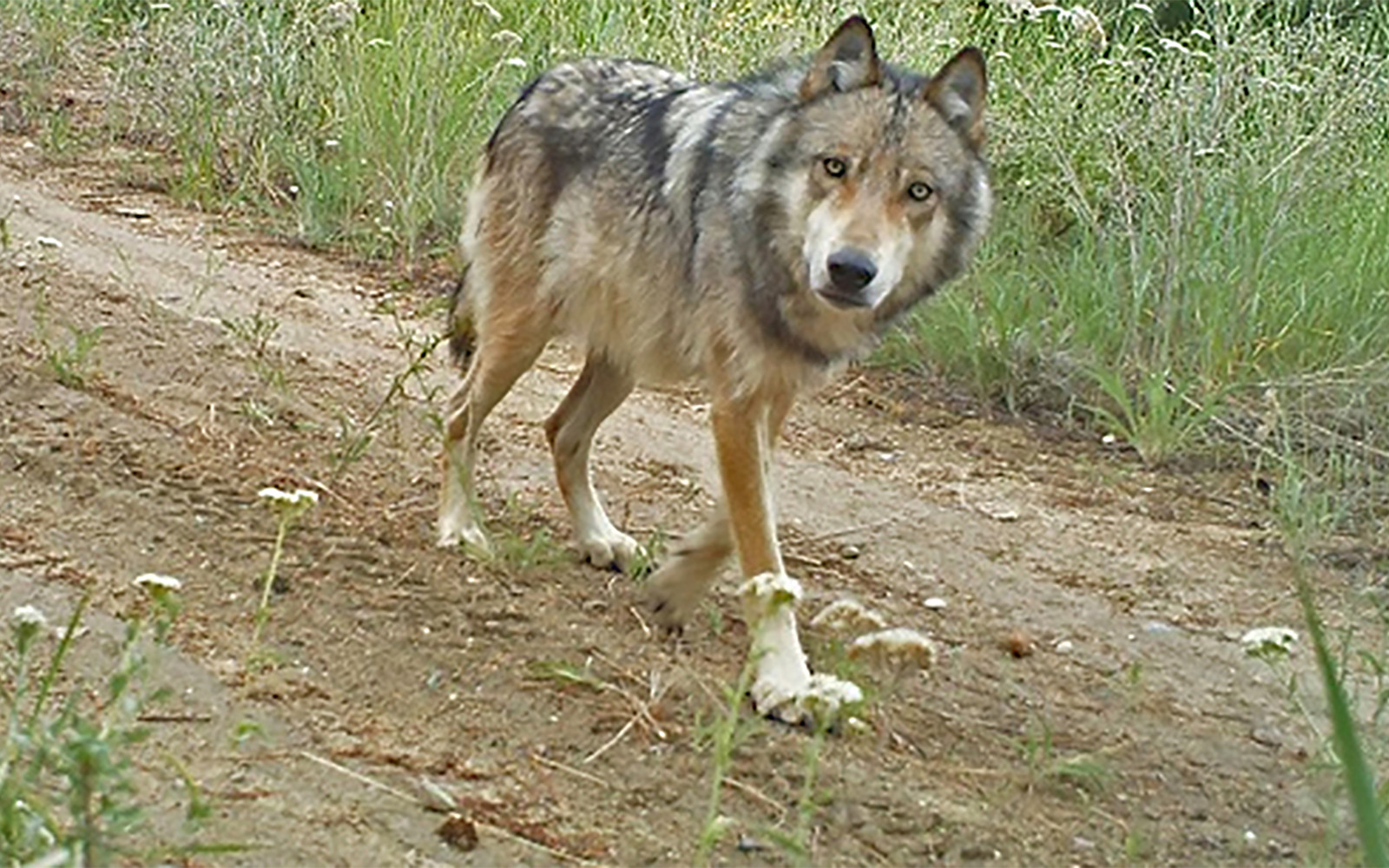
Wolves from the Salmo Pack in Washington (WDFW)


Unlike some of the previous incidents of injury or death of livestock, which the department appeared to have erroneously determined were caused by wolves, the two depredations late last week appear to have indeed been caused by wolves, according to outside experts.  

Minimal action was taken to resolve the conflict with the Wedge pack using nonlethal means, including moving calving to areas not used by wolves, turning the calves out later and sending cowboys to check on the cows more frequently, according to information on the Washington Department of Fish and Wildlife website. Many other actions designed to avoid fatal conflicts between livestock and wolves were not taken, including the use of a range rider or guard animals, or the practice of hazing wolves when they come near livestock. Resolving conflicts using nonlethal measures before killing wolves is a requirement of Washington’s wolf-management plan.

"Regardless of whether or not it is ultimately determined that wolves clearly killed livestock in the Wedge area, the experience to date has indicated that the department needs to take some time to get its ducks in row," said Bob Ferris, executive director of Cascadia Wildlands. "Endangered species such as wolves need to be managed with clear rules and solid procedures by people adequately trained in this process, and we hope to see that in the future."

The department killed a female wolf from the Wedge pack — so named because its range includes a triangle-shaped area defined by the Canadian border and the Kettle and Columbia rivers — on Aug. 7.

Wolves are just beginning to make a comeback in Washington after a government-sponsored program of poisoning, shooting and trapping the animal to extinction in the state. Since the historic return of wolves to Washington in 2008, eight packs have become established in the state. This past December the state’s Fish and Wildlife Commission adopted the “Wolf Conservation and Management Plan for Washington,” a stakeholder-developed framework that outlines recovery and management objectives for wolves in Washington.

                                                                      #####

Relevant Links:

Previous Wedge Pack Press Release 

Wedge Pack Blog Post


Aug24

State of Washington Urged to Halt Wolf Killing: Evidence Lacking That Wedge Wolf Pack Is Responsible for Livestock Loss

For Immediate Release, August 24, 2012

Contact: Bob Ferris, Cascadia Wildlands, (541) 434-1463
Noah Greenwald, Center for Biological Diversity, (503) 484-7495
Suzanne Stone, Defenders of Wildlife, (208) 861-4655
Greg Costello, Western Environmental Law Center, (206) 260-1166
 
OLYMPIA, Wash.— Seven conservation organizations sent a letter today calling on Washington Gov. Christine Gregoire and state agencies to rescind an order to kill four wolves in the Wedge wolf pack in northeastern Washington. The kill order comes just two weeks after the state killed another wolf-pack member. State agents have been dispatched and are currently in the field tracking down the wolves to kill.
 
The letter was sent by Cascadia Wildlands, Center for Biological Diversity, Defenders of Wildlife, Humane Society of the United States, Snohomish Group of the Sierra Club Washington State Chapter, Western Environmental Law Center and Wolf Haven International. The groups assert that the state’s plan to kill the four wolves is illegal because the state has failed to show that the livestock were killed by wolves or that the ranchers took actions to avoid depredations. 
 
“This is a simple case of the state not following its own rules,” says Bob Ferris, executive director of Cascadia Wildlands. “You can’t kill four more members of the pack if you can’t show conclusively that wolves were responsible for the livestock deaths.”
 
There is a strict standard in the recently adopted “Washington Wolf Plan” about when lethal control on wolves can be authorized, including demonstrating that the livestock at issue “have clearly been killed by wolves.” A state of Washington incident report about a recent depredation near the Diamond M Ranch specifically concluded that the incident could not be confirmed as a wolf predation. 
 
“The killing of five wolves in the Wedge pack would completely violate both the spirit and letter of the state’s wolf-management plan,” said Noah Greenwald, endangered species director with the Center for Biological Diversity. “The state needs to rescind this kill order right away and pull its staff from the field.” 
 
Several wolf-depredation experts have reviewed the state’s investigation reports and found that none of the injuries are characteristic of wolf predation on livestock. 
 
“The rush to kill these wolves based on misidentified predation sets a very dangerous precedent for wolf management in Washington,” said Suzanne Stone, northern Rockies representative for Defenders of Wildlife, who managed the organization’s regional wolf-compensation program from 1999 to 2011. “Instead of waiting for legitimate depredations to occur, the state should focus on using proven nonlethal alternatives that are much more effective at reducing conflicts over the long run. People will never learn how to coexist with wolves if the state is so quick to kill them.”
 
This pack is known as the Wedge pack because its range includes a triangle-shaped area defined by the Canadian border and the Kettle and Columbia rivers. The incidents have taken place on leased grazing land within the Coleville National Forest.
 
“Managing the return of wolves to our public landscape is an emotional issue, and the state will always be pressured to take extreme control measures when livestock are killed regardless of whether a wolf was responsible or not,” said Greg Costello with the Western Environmental Law Center. “Therefore, it is imperative that the state’s integrity is maintained during the wolf recovery process to ensure fair and transparent decision-making.”
 
Wolves are just beginning to make a comeback in Washington after a government-sponsored program of poisoning, shooting and trapping the animal to extinction in the state. There are currently eight packs of wolves in Washington since the animals’ historic return in 2008. This past December the Washington Department of Fish and Wildlife Commission adopted the “Washington Wolf Plan,” a stakeholder-developed framework that outlines recovery and management objectives for wolves in Washington. 
 
###


Aug22

The Wedge Pack–Prudent Protocols and Thick Skin Needed


Washington wolf (WDF&W)

The situation with the Wedge pack in Eastern Washington is troubling and raising our blood pressure here at Cascadia Wildlands.  While we fully understand and support the need for management actions to deal with problem wolves, we are very concerned that Washington is putting the cart before the horse on this action.  Our concerns in this instance revolve around three areas:
 
1) Conclusive Verification: From what we have heard from various sources verification of the extent and seriousness of the depredation is in question.  We understand that there are 8 animals and those animals have been discovered during the last two months.  What remains in question is whether those animals were killed or harmed by wolves and whether those were killed or harmed by wolves in the last two months.
 
2) Apparent Lack of Preventive Actions: Because these potential depredations occurred on public lands and involve species listed under the Washington State Endangered Species Act, we think the State of Washington should make sure that the lessee has taken prudent actions to avoid depredation.  In this case, we have reason to believe that this lessee has not acted prudently and we think that should be a pre-condition on public lands.
 
3) Appropriateness of Remedy: We have heard that the state plans to kill four non-alpha wolves from the pack.  The stated rationale is that this will lower the food requirements of the pack and thus solve the problem.  We believe this is a political decision rather than a decision driven by science.  We are dubious of this being an appropriate remedy.  Moreover, this seems to violate the Washington wolf plan’s guidance about avoiding control actions during denning season.  
 
All wolf management actions occur in a fish bowl with shouting happening from many different quarters and often in the presence of unbelievable pressure—these are all givens.  But these programs must be guided first by good science and then by ethics-based commonsense.  Those programs that work best are built around strong, pre-established protocols and covered with an abundance of thick skin.  We think the wolf management program in Washington needs to pay more attention to the former and think about acquiring the latter.
 
Lest I be accused of offering harsh and detached criticism, I administered the wolf compensation program for roughly eight years when I worked at Defenders of Wildlife and was the one who ultimately signed off on all compensation payments made during that time.  I understand the level of pressure and the nature of the vitriol. It is a necessary part of running a defensible program while at the same time forwarding recovery.  
 
Bob Ferris
Executive Director 


we like it wild. Follow us Facebook Twiter RSS