Press Room

May15

Oregon Outdoor Council Needs to Be Held Accountable


Oregon Outdoor Council Needs to Be Held Accountable

For immediate release
May 15, 2013
 
Contacts:
 
541-434-1463 (Bob only)
 
Bend—A founding board member of the Oregon Outdoor Council (OOC) and the Oregon Outdoor Council Foundation (OOCF) issued a public statement today claiming that the non-profit needs to mend its ways to be in compliance with the law and ethical standards of non-profit behavior.  This statement was authored by Steven K. Chapman who served as Secretary/Treasurer from the inception of the organization in 2011 until early 2013 when he resigned over conflicts relating to organizational practices and policies.
 
“In these post-ENRON days, the public and I have little tolerance for sloppy accounting, self-dealing and conflicts of interest.  The OOC Board was warned by their CPA and legal counsel that their accounting was flawed and that certain expenditures and behaviors were  inappropriate,” continued Chapman ,”the other board members elected not to listen to sound professional advice that  I could not ignore.”
 
Over the past couple of years the Oregon Outdoor Council and the Oregon Outdoor Council Foundation have gained prominence as a political force to be reckoned with in Salem.  As with many that rise so quickly, OOC cut corners and at times appeared to think that rules such as lobbying registration, transparency and IRS limits on spending were for others and not them.  As a consequence their mercurial ascent is now stymied as serious questions arise about their legal and ethical practices as well as their take-no-prisoners  approach to dealing with those with different views—even former allies.  
 
“During my review I noticed some expenditures which are highly questionable as to how theentity may have benefited.”  Letter from David Howland CPA dated October 10, 2012
 
At issue here are the appropriateness of expenses claimed by OOC executive director and board vice president Jerod Broadfoot as well as his use of non-profit resources for personal use.  Mr. Broadfoot requested reimbursements for travel, lodging, food and entertainment where he variously failed to document material benefits to the organization; differentiate sufficiently between his consulting firm expenses and those for the non-profit; and deduct expenses related to his spouse including their stay in a luxury boutique hotel in the Washington, DC area.  
 
“It is my job to advise OOC on how to avoid enforcement actions by agencies like the IRS and the Oregon DOJ.  The easiest and surest way to avoid enforcement actions is by making sure your books are clean to begin with, that way you do not have to agree to “follow the law” if and when the government comes knocking at your door. “ OOC legal counsel e-mail to board dated August 17, 2012.  
 
In addition, Mr. Broadfoot urged the OOC board to purchase computer hardware ostensibly for the non-profit that was also apparently used in his for-profit operations.  It was argued that this expenditure was necessary to produce videos for the organization.  Less than three minutes of video was produced for OOC, while Broadfoot Media greatly expanded their video activities.  
 
“Steve is right to be concerned about what is going one [sic], especially in light of the fact that all of the OOC board members could be held personally liable.” OOC legal counsel e-mail to board dated August 17, 2012.  
 
There are also questions about the organization’s compliance with IRS lobbying expenditure limits for 501(c)3 non-profits.  In 2012, the organization’s budget (OOCF) was nearly $33,000 with more than $16,000 expended for a poll relating to an envisioned ballot initiative and legislative actions.  This is in clear violation of the 20% limit set by the IRS regulations and does not include other expense which are likely associated with lobbying  activity.  
 
Mr. Chapman has taken this extraordinary action for several reasons.  First, Mr. Chapman tried to take his fiduciary responsibilities as a board member seriously.  Moreover, he believes that non-profits like OOC and the Oregon Hunters Association (OHA) should communicate openly and honestly with each other (see poll and communication with OHA) And he is concerned that his reputation is being attacked by the remaining OOC board members and needed to set the record straight.
 
“Many might question why I am so concerned about these relatively small amounts of money.” said Chapman.  “It is not the size of the organizational missteps that is important, it is the pattern and the consistency of infractions that was of concern to me.  I remain fully committed to hunting, angling and wildlife issues, but it has to be done legally and ethically.” 
*******
Links:


Apr18

Press Release: Bills to Curb Suction Dredge Mining Approved by Key Senate Committee

For immediate release
April 18, 2013
 
Contact
Josh Laughlin, Cascadia Wildlands, 541.844.8182
Erik Fernandez, Oregon Wild, 971.230.4484
Forrest English, Rogue Riverkeeper, 541.261.2030
 
Salem, OR — Outdoor businesses, the commercial fishing industry, fisheries experts, and conservation organizations applaud the passage of Senate Bill 838 and SB 401 by the Senate Environment and Natural Resources Committee last night. The legislation aims to protect water quality and salmon in Oregon’s iconic river systems from the impacts of harmful suction dredge mining.
 
“These bills safeguard Oregon’s famed rivers, which means more business and more people enjoying them for the long term,” says Frank Armendariz, owner of River Trail Outfitters in Eugene. “As our population grows so will demand for river access, and that underscores the critical need to protect these special rivers from harmful activity like suction dredge mining.”
 
Suction dredge mining in waterways involves the use of gasoline-powered vacuums, mounted on floating rafts, which suck up the riverbed in search of gold. Scientific evidence demonstrates that the practice harms the early stages of fish development, fish habitat, invertebrate and bivalve communities (fish food), and stirs up toxic mercury. There has been a spike in suction dredge mining in Oregon since California enacted a moratorium on the practice in 2009 due to its impacts on salmon. Between 2005-2012, there was a 580% increase in suction dredge mining in Oregon, going from 414 to 2,409 permits issued.
 
SB 838 calls for a time out in the form of a moratorium on suction dredge mining in Oregon waterways currently designated as Essential Salmon Habitat. These rivers have been recognized as being significant due to their importance in protecting and recovering salmon runs. The moratorium would be replaced in 2018 by a modernized permit system for suction dredge mining to better protect river habitat.
 
“Vacuuming up river bottoms in search of gold flecks is not in the interest of our clean water and wild salmon legacy,” says Josh Laughlin with Cascadia Wildlands. “We need a new permitting system that safeguards these values that make Oregon so special.”
 
SB 401 would require the state of Oregon to study what rivers should be added to the State Scenic Waterway system. The analysis would consider iconic rivers like the Illinois, Rogue, South Umpqua, Grande Ronde, Sandy, Molalla, and other renowned rivers across the state. State Scenic Waterways have a proven track record of balancing conservation and development. In particular, this level of protection prevents dams and suction dredge mining. Many of these waterways provide communities with clean drinking water. The state is currently 24 years over due to make recommendations to the system. SB 401 requires the state to finalize the study within two years.
 
"We are very worried about the drastic increase in suction dredge mining in Oregon's iconic rivers, especially rivers that serve as drinking water sources,” says Erik Fernandez of Oregon Wild. “I would certainly prefer to not have toxic mercury stirred up in my municipal watershed."
 
In early April, the Oregon Chapter of the American Fisheries Society sent a letter to Oregon legislators outlining the myriad impacts suction dredging has on fish. One of the letter’s recommendations was to prohibit or greatly reduce suction dredge mining in areas used for spawning by sensitive fish stocks. This followed a similar letter issued by the Western Division of the American Fisheries Society prior to the California moratorium.
 
“The science is very clear. When salmon lay eggs in unnatural gravel piles left by mining, the eggs are dramatically more likely to be washed away and destroyed in winter storms,” says Forrest English of Rogue Riverkeeper. “We simply don’t have the threatened salmon eggs to spare.”
 
Increases in suction dredging in rivers like the Rogue have led to complaints from nearby landowners of illegal trespassing and noisy engines running in the river, as well as river damage to salmon habitat.
 
The bills now move on to the Ways and Means Committee. At the Senate Environment and Natural Resources Committee hearing on the bills on Monday, Governor Kitzhaber’s office expressed support for a moratorium on suction dredge mining while a new permitting system is developed. The commercial fishing industry, outdoor recreation industry and fisheries experts also testified in favor of the legislation.
 
 
                                                                        ####
 
Click here to read SB 838.
Click here to read SB 401.
Click here to read the Oregon Chapter of American Fisheries Society letter to legislators.
 

Mar27

Press Release: Sensitive Wildlife Habitat and Drinking Water Supply Protected Above McKenzie

For immediate release
March 27, 2013

Contact:
Doug Heiken, Oregon Wild, 541.344.0675, dh@oregonwild.org
Susan Jane Brown, Western Environmental Law Center, 503-914-1323, brown@westernlaw.org
Josh Laughlin, Cascadia Wildlands, 541.434.1463, jlaughlin@cascwild.org

EUGENE – United States District Court Judge Anne Aiken has found that the United States Forest Service broke the law in seeking to carry out the controversial Goose logging sale near McKenzie Bridge, Oregon, without a detailed analysis of potential environmental damage.  This logging sale has drawn intense opposition from local residents and landowners concerned about harm to wildlife and nearby streams.  Represented by the Western Environmental Law Center,  the conservation organizations Oregon Wild and Cascadia Wildlands filed a legal challenge against the planned logging in 2012.

“The Judge's decision that the Goose logging sale is illegal is vindication for the concerns of local residents and conservationists,” said attorney Susan Jane Brown of Western Environmental Law Center.  “The McKenzie River and surrounding forests is too important to our community, and to the people of Oregon, to allow this kind of unwise logging project to go forward.”

The judge found that the Forest Service failed to properly analyze the impacts of the 2,100-acre logging project-an area the size of 2000 football fields.  Potential environmental harm includes damage to the 9,700-acre Lookout Mountain Potential Wilderness Area above McKenzie Bridge, and logging within protected stream buffers and sensitive species habitat.

The legal ruling comes on the heels of passionate opposition by members of the local community. Many residents of the McKenzie Bridge area believe they weren't properly notified about the project with some only hearing about it once timber sale flagging was put up adjacent to their properties. Residents have collected nearly 5,000 signatures opposing the logging project.

“We are not opposed to all logging,” said Doug Heiken, Conservation and Restoration Coordinator with Oregon Wild. “But the Forest Service has a responsibility to the American people to ensure that projects like this don't damage fish and wildlife habitat or pollute streams that provide drinking water to our communities.  With the Goose logging project, the Forest Service was clearly on the wrong track.”

The judge also found that the agency failed to fully consider the harm logging in the area could have on threatened wildlife like the northern spotted owl.

“While there are some restorative components to this project such as thinning in dense young stands, the Forest Service chose to pair them with aggressive logging in mature forest near streams, threatened species habitat, and within a potential wilderness area,” says Josh Laughlin with Cascadia Wildlands. “It is imperative the Forest Service focus on restoring what has been damaged by past mismanagement and abuse, and move away from controversial projects that make conditions worse in the forest.”

Conservation groups believe the Forest Service should instead be spending limited taxpayer dollars on projects that restore degraded landscapes, like restoration thinning in young tree plantations formed by past clearcutting, decommissioning harmful roads, and enhancing fish and wildlife habitat. While the Forest Service did analyze an alternative in the Goose project that focused on restoration thinning in young plantations that the organizations supported, the agency instead chose to adopt the much more controversial alternative.

The organizations are  represented by attorneys Susan Jane Brown and John Mellgren at Western Environmental Law Center.

                                                           ###


Mar05

Press Release: 52 Members of Congress Urge Continued Federal Protections for Wolves in Lower 48 States

For immediate release, March 5, 2013

Contacts:
Noah Greenwald, Center for Biological Diversity, (503) 484-7495
Josh Laughlin, Cascadia Wildlands, (541) 434-1463

PORTLAND, Ore.— In an effort championed by Reps. Peter DeFazio (D-Ore.) and Ed Markey (D-Mass.), 52 House members sent a letter today to the director of the U.S. Fish and Wildlife Service urging an about-face on the agency’s anticipated proposal to remove federal protections for wolves across most of the lower 48 United States.

“We are grateful that these 52 representatives are standing strong for continued federal protections for wolves,” said Noah Greenwald, endangered species director at the Center for Biological Diversity. “With wolves only just beginning to recover in the Pacific Northwest, California, southern Rocky Mountains and Northeast, now’s not the time for the Fish and Wildlife Service to turn its back on wolf recovery.”

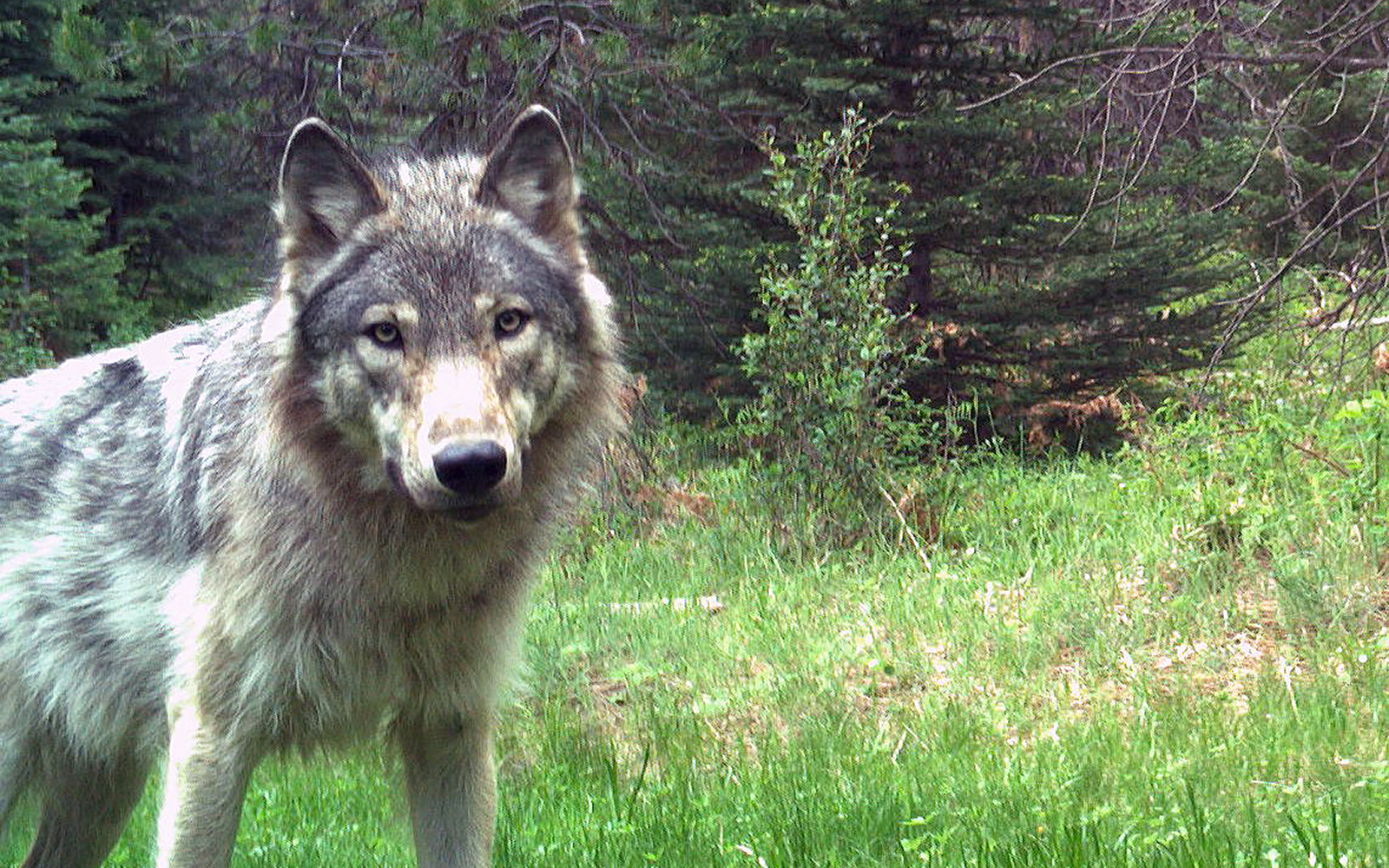
An estimated 2 million wolves once roamed freely across North America, including most of the United States. But bounties, a federal extermination program and human settlement drove the species to near extinction in most of the lower 48. While protected by the Endangered Species Act, wolf populations in the northern Rocky Mountains and the Western Great Lakes states increased; but these regions amount to a mere 5 percent of the wolf’s original range, and in other regions wolves are only just beginning to return.

“The job of wolf recovery is far from over and the members of Congress who have written to the Service are asking that science, not politics, guide federal wolf management,” said Josh Laughlin of Cascadia Wildlands. “Maintaining federal protections is critical in allowing wolves to assume their valuable ecological role across the American landscape.”

Since the original wolf recovery plans were written in the 1980s, scientists have learned much more about wolves’ behavior, ecology and needs. Research has shown that returning wolves to ecosystems sets off a chain of events that benefits many species, including songbirds and beavers that gain from a return of streamside vegetation, which thrives in the absence of browsing elk that must move more often to avoid wolves. And pronghorn and foxes are aided by wolves’ control of coyote populations. Protecting ecosystems upon which species depend is a specific goal of the Endangered Species Act — all the more reason for expanded, rather than diminished, wolf recovery efforts.

Bowing to political pressure from wolf opponents, the Service has no plans for wolf recovery in areas beyond those regions it has deemed recovered (the northern Rockies and western Great Lakes). In states where federal delisting has occurred, there are insufficient protections from local pressures to hunt or “control” wolves back to the brink of extinction. In the 18 months since federal delisting began in 2011, more than 1,700 of the 5,000-6,000 recovered wolves in the lower 48 have been killed.

Conservation organizations are hopeful that Interior Secretary nominee Sally Jewell will be a stronger advocate for wolves than outgoing Secretary Ken Salazar, who never called for comprehensive gray wolf recovery across the country.

The Center for Biological Diversity is a national, nonprofit conservation organization with more than 500,000 members and online activists dedicated to the protection of endangered species and wild places.

Cascadia Wildlands is a Eugene, Oregon-based nonprofit conservation organization that educates, agitates and inspires a movement to protect and restore Cascadia’s wild ecosystems.
    

                                                                  ###


Feb28

Extractive Industries are Killing the Planet–Eugene Rally March 3rd

FOR IMMEDIATE RELEASE: February 27, 2013

Extractive Industries are Killing the Planet
 
Eugene, Ore.—March 3 at 1 p.m. A rally will be held in the University of Oregon EMU amphitheater proceeded by a march against the fossil fuel industry. The march is follow-up to the “End All Extraction” march on February 17, since the demands from the first march were not met.
 
The event is to coincide with the end of the Public Interest Environmental Law Conference (PIELC), which begins on February 28. Hundreds will gather and march against governments and businesses that support fossil fuels and other extractive industries.
 
“The people need to hold corporate extractors accountable since government has not,” said Jim Flynn of the Cascadia Forest Defenders, sponsors of the march.
The rally is in solidarity with local and national groups such as Idle No More, Tar Sands Blockade, and No Coal Exportation.
 
These movements include thousands of environmental and social justice activists from many varied groups such as non-governmental organizations (NGOs), first nations, minority justice groups, small businesses, labor unions and concerned citizens of all varying political backgrounds.
 
This event features a large collaboration of national and local organizations and people coming together to stand up and say “no” to tar sands extraction, “no” to the Keystone XL pipeline, “no” to coal extraction and exportation, while simultaneously saying “yes” to equality for all life, “yes” to challenging governments and businesses for sustained forms of energy and, “yes” to clean air, water and land/space for future generations to live.
 
The event will kick off with a rally that will include speeches by Tar Sands Blockade spokesperson *Ramsey Sprague*; executive director of the Civil Liberties Defense Center *Lauren Regan*; and *Sam Kopf* of the Cascadia Forest Defenders.
 
The Erb Memorial Union (EMU) amphitheater is located on the northwest side of the EMU at the University of Oregon.
 
For more information on the groups we are in solidarity with, please visit these websites:
 

Feb19

Press Release: Legislation Introduced to Protect Water Quality and Wild Salmon in Oregon

For immediate release
February 19, 2013
 
Contact
John Ward, Rogue Flyfishers (Medford), 541.482.2859
Frank Armendariz, River Trail Outfitters (Eugene), 541.228.4084
 
Salem, OR — Local businesses, outdoor enthusiasts, and conservation organizations applaud the recent introduction of Senate Bill 401 by Senator Alan Bates (D-Medford/Ashland) which would protect 30 rivers as State Scenic Waterways in recognition of their outstanding scenic vistas, value to fish and wildlife, and importance as sources of drinking water.
 
“Safeguarded rivers attract river enthusiasts, which means more business and more people enjoying them for the long term,” says Frank Armendariz, owner of River Trail Outfitters in Eugene. “As our population grows so will demand for river access, and that underscores the critical need to protect these special rivers.”
 
SB 401 would protect segments of the Rogue, Illinois, South Umpqua, Grande Ronde, Sandy, Molalla, and other renowned rivers across the state. A State Scenic Waterway designation maintains free-flowing waters in their natural state, and protects water quality and quantity at a level necessary for municipal sources, recreation, and fish and wildlife. Inclusion in the system also means these rivers would be protected from damaging suction dredge mining, a practice involving the use of gasoline-powered vacuums, mounted on floating rafts, to suck up riverbed sands and gravels in search of gold.
 
“World-class rivers like the Illinois, Rogue, and South Umpqua have become ground zero for destructive suction dredge mining in our state, and this practice is impacting imperiled wild salmon runs,” says John Ward of Rogue Flyfishers. “This designation will benefit salmon recovery as water quality and fish habitat get protected.”
 
California placed a moratorium on suction dredge mining in 2010 due to its impacts on imperiled salmon. With the moratorium in place and gold prices near all-time highs, many California suction dredge miners have moved operations north to target Oregon rivers, including the Rogue, Illinois, and South Umpqua.
 
Increases in suction dredging in Oregon on places like the Rogue River have led to complaints from nearby landowners of illegal trespassing and noisy engines running in the river, as well as river damage to salmon habitat.
 
If successful,  SB 401 would represent the third addition to the State Scenic Waterway system. In 1970, Oregonians voted by a two-to-one margin to create the system, following a successful citizens’ initiative petition. The program originally contained all or part of six rivers but has grown through additional initiatives to include 19 rivers as well as Waldo Lake.  The system was last updated in 1988.
 
                                                                        ####
 
Click here to read SB 401.
Click here for more information on the impacts of suction dredge mining.
 

Feb14

Press Release: Congress Feels the Love for Oregon’s Natural Treasures

FOR IMMEDIATE RELEASE


February 14, 2013

Josh Laughlin, Cascadia Wildlands
(541) 844-8182

Erik Fernandez, Oregon Wild
(503) 283-6343, ext. 202

Pete Wallstrom, Momentum River Expeditions
(541) 488-2525

Portland, Oregon   –   A coalition of Oregon conservation organizations is applauding efforts by Senators Ron Wyden and Jeff Merkley to re-introduce a package of protections for several natural areas in Oregon. Protection for the Molalla River, Oregon Caves, and other areas have been strongly supported by a broad spectrum of Oregonians for years, from local elected officials to fishing guides to rafting companies.

The Oregon Treasures legislation includes areas that have been fully-vetted, and have been introduced in at least one previous congress. Included in the package are:

Devil’s Staircase:  Some 30,500 acres of rare, remaining Coast Range old-growth forest with colossal stands of Douglas fir, hemlock and cedar near the legendary Devil’s Staircase waterfall would be protected as Wilderness.

Mollala River:  A recreational hotspot south of Portland and the source of drinking water for the communities of Molalla and Canby, this 21-mile stretch of the Mollala River in Clackamas County would be protected with a Wild and Scenic River designation.

Rogue River:  The Wild Rogue proposal includes 93 miles of Wild and Scenic River designations and 60,000 acres of Wilderness protection for the rugged canyons and spectacular whitewater of the lower Rogue River.

Oregon Caves:  The Oregon Caves National Monument in Josephine County would be expanded from the current 480 acres to 4,070 acres to head off threats from grazing, and include more of the area’s big trees and old-growth forest while continuing to allow hunting.

Chetco River:  Legislation will enhance the existing Wild and Scenic River designation for this sparkling Curry County waterway to head off threats from destructive mining.

Cathedral Rock and Horse Heaven:  Along the banks of the John Day River in Jefferson County, these areas have long been identified as having outstanding Wilderness attributes, including significant biological diversity and wildlife habitat.

These Wilderness and Wild and Scenic River proposals have the broad support of thousands of Oregonians and citizens’ groups. The Wild Rogue Alliance represents over 100 southern Oregon businesses, along with fishing and conservation groups, while the Molalla River Alliance consists of local property owners, the city of Molalla, and even the local police department.

Currently only four percent of Oregon is protected as Wilderness, the “gold standard” for public lands protection, compared with 10% in Washington, 15% in California, and eight percent in Idaho. “Oregon has a very green reputation, one we don’t live up to very well when it comes to protecting our natural treasures. This legislation is an important step in the right direction in correcting that imbalance,” said Oregon Wild Wilderness Coordinator Erik Fernandez.

With the health of the lower Rogue Valley’s economy in mind, Pete Wallstrom of Momentum River Expeditions, a commercial rafting company and guide service said, “Expanding safeguards for the Wild Rogue would not only help protect our local environment, but also our local recreation and tourism economy for generations to come. The Rogue River is a nationally-recognized treasure that lures people to the area on name and reputation alone. It is one of the central engines of a tourism and recreation economy in southern Oregon that continues to grow and provide sustainable long-term jobs and opportunities.”

Noting the classic, wild character of the Devil’s Staircase area, Cascadia Wildlands Campaign Director Josh Laughlin said, “The thundering waterfalls of the Devil’s Staircase, towering old-growth forests, rugged terrain, and myriad of unique species are part of what make Oregon so special. Long overdue for Wilderness protection, it is exciting to see Devil's Staircase wilderness legislation once again moving through the process to protect it forever." 

                                                              ####


Feb13

Gaye Lee Russell and Her Badass Band to Play Pints March 4th

For immediate release

February 13, 2013

Contact

Gaye Lee Russell 541-844-1212 glrcaleb@yahoo.com

Josh Laughlin, Cascadia Wildlands 541-434-1463  jlaughlin@cascwild.org


Gaye Lee Russell and Her Badass Band to Perform for Cascadia Wildlands’ Pints Gone Wild! Benefit At Ninkasi Brewing Co. on March 4

            Eugene, OR — Eugene’s own Gaye Lee Russell and her Badass Band have announced they will play at Cascadia Wildlands’s first-Monday-of-the-month “Pints Gone Wild!” benefit from 5:30-7 pm on the Ninkasi Brewing Co. patio on Monday, March 4. The event is free and open to the public. Cascadia Trivia Night follows the music inside the tasting room.

            25% of pint sales at the tasting room at Pints Gone Wild! is generously donated to Cascadia Wildlands to support a wide range of the organization’s conservation work, including designating the Devil’s Staircase Wilderness in the Oregon Coast Range, recovering gray wolf populations back into the Pacific West, and creating new state scenic waterway designations to protect wild salmon in Oregon.

            Gaye Lee Russell and Her Badass Band are proud to support Cascadia Wildlands. “The landscapes of Cascadia give us our lifeblood, and we have an obligation to protect them,” says Gay Lee Russell. “We are excited to be working with Cascadia Wildlands to ensure that future generations get a chance to marvel at our clean rivers, wild salmon runs and storybook wilderness.”

            Whether straight out rockin’ the blues or mellowing out with soulful ballads, Gaye Lee Russell is a dynamic singer and an all-out charismatic entertainer.  Gaye Lee shines as Rainy Day Blues Society Rooster Award winner 2009 for Best Female 


Blues Vocalist, and 2008 Best of Eugene Best Jingle Writer for her recording of Get Hip to the Eugene Green Scene.  Singing professionally on stage and touring nationally and internationally from the age of fourteen, Gaye Lee Russell has continued to perform and record with major rock, jazz and blues artists. She has shared stage and studio with a diverse array of national and internationally known musicians such as Muddy Waters, Gil Scott-Heron, Robert Cray, Paul deLay, BTO, Joan Jett, John Mellencamp, Dan Siegel, Meredith Brooks, The Tommy Castro Band with Magic Dick, Kenny Lee and Deanna Bogart, Mason Williams, Mel Brown and Hadley Caliman, John Hendrix and Annie Ross among many other top-flight performers.  

            Formerly with Eugene's The BOE Orchestra, Random Blues Band and the Gaye Lee Russell Experience (a tribute to Janis Joplin), on March 4 Gaye Lee will be performing with her “Badass Band” that includes rockin' blues guitarist Chad Jensen, Steve Carlile-drums, Vince Black (formerly with Black Uhuru, Andrew Tosh, Sonny Rhodes, Eek-a-Mouse, etc.) and special guest artists.

            The Ninkasi tasting room and patio are located at 272 Van Buren Street in Eugene’s historic Whiteaker neighborhood.

*** A high-resolution photo of Gaye Lee Russell is attached for press use.

### 

Feb13

Eugene Fossil Fuel and Climate Rally February 17th

Americans Rally Together to Fight Extractive Industry

In solidarity with the national FORWARDONCLIMATE rally, hundreds will gather and march against governments, businesses that support fossil fuels and other extractive industries. 
 
Eugene, Ore.—Feb. 17 at 1 p.m. hundreds will rally at the University of Oregon EMU amphitheatre in a march against the fossil fuel industry. The march is in unity the national FORWARDONCLIMATE rally in Washington D.C. where over 20,000 people are expected to attend. 
 
Eugene’s rally will end the Social Justice, Real Justice conference that begins Feb. 14 and is in solidarity with local and national groups such as Idle No More, Tar Sands Blockade and No Coal Exportation.
 
These movements include thousands of environmental and social justice activists from many varied groups. There are allied non-governmental organizations (NGOs), first-nations, minority-justice groups, activist-groups, small-businesses, labor unions and concerned citizens of all varying political backgrounds. 
 
This event is unique because it features a large collaboration of national and local organizations and peoples coming together to stand up and say “no” to tar sands, “no” to the Keystone XL pipeline, “no” to coal exportation while simultaneously saying “yes” to equality for all life, “yes” to challenging governments and businesses for sustained forms of energy and, “yes” to clean air, water and land-space for future generations to live, and thrive from. 
 
The event will kick off with a round dance led by Idle No More members. After the march, food and refreshments will be provided by Food Not Bombs and Chief Caleen Sisk of the Winnemem Wintu tribe will speak of importance of ending extractive industry and community collaboration. 
 
The partnership of rallies will be one of the largest protests in American history and is the result of governments and businesses not listening to the voice of the people. 
 
The EMU amphitheater is located on the northwest side of EMU: 1228 University of  Oregon. Eugene OR, 97403
There is no website for our event, but for more information on the national event and groups we are in solidarity with please visit these websites:
 
 
Contact: 
 
Noah DeWitt: 415-342-7399 noahdee@gmail.com
Kate Armstrong: 541-350-2833 kate.armstrong11@gmail.com
Frida Downey: 541-391-3624 sanchvn@riseup.net
 
Cascadia Wildlands is a member of the Power Past Coal coalition.  For more information on this topic–particularly coal and LNG exports, please visit our Combating Climate Change campaign pages and these links:


Jan30

Press Release: Conservationists Challenge Controversial BLM Clear-Cutting Pilot Project

FOR IMMEDIATE RELEASE

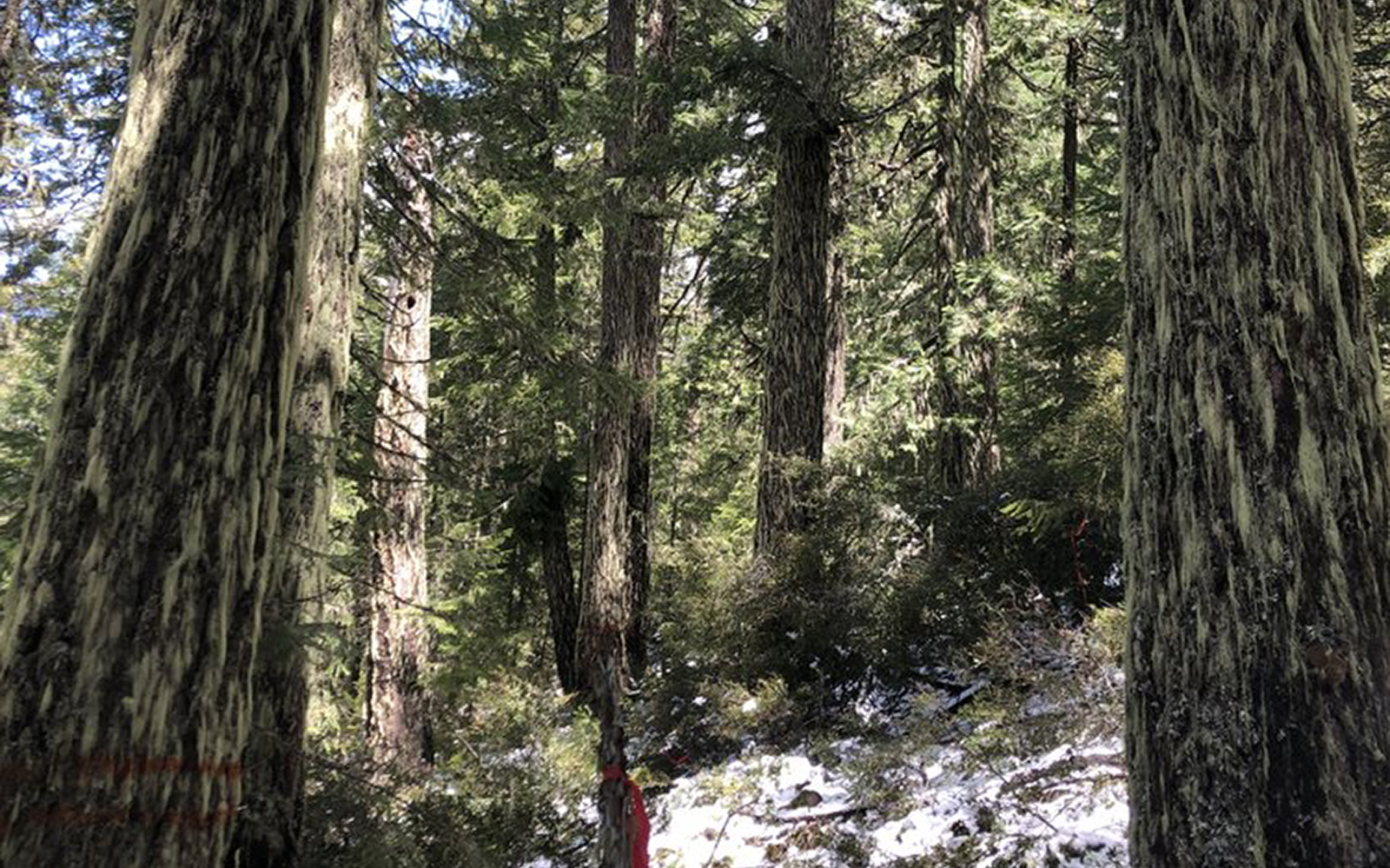
Old forest in the Roseburg BLM (Josh Laughlin)


January 30, 2013
Doug Heiken, Oregon Wild
(541) 344-0675; 
dh@oregonwild.org       
 
Francis Eatherington, Cascadia Wildlands

(541) 434-1463; francis@cascwild.org


Roseburg, Oregon  —  Conservation groups today filed an administrative challenge to the proposed clearcutting of more than 100 acres of mature forests and spotted owl critical habitat on public lands near Canyonville. The White Castle Timber sale is part of the Roseburg Bureau of Land Management's (BLM) Secretarial Pilot project, promoted by Secretary of the Interior Ken Salazar as a way of restoring the forest and increasing timber harvest on federal forest lands.


"The claim that clearcutting 100 year old trees is ecological restoration is an insult to the intelligence of Oregonians," said Doug Heiken of Oregon Wild. "We have worked closely with the Mount Hood and Siuslaw National Forests on genuine restoration projects that have received national recognition as models for sustainable management. The White Castle sale is a cynical effort to resurrect destructive clearcutting and call it restoration."


The BLM is facing pressure from the timber industry and counties to increase logging, even though the BLM has met its timber targets for the last decade by thinning young forests instead of clearcutting older forests.


Oregon politicians like Peter DeFazio, Kurt Schrader and Greg Walden have gone further, suggesting 1.5 million acres of public forests be turned over to a quasi-public entity that would clearcut them under the exceedingly weak provisions of the Oregon Forest Practices Act (OFPA) in order to generate revenue for cash-strapped Western Oregon counties. The OFPA provides no protection for old-growth trees, almost no protection for streams, and extremely limited opportunities for public involvement. County finances can be provided through shared responsibility – with a portion of the needed funds coming from local, state, and federal sources – instead of entirely from logging.


Oregon Wild and Cascadia Wildlands have offered their support for thinning dense young forests as a way to restore damaged forests, provide jobs, and produce wood products as a byproduct. The two orgnaizations are opposed to clearcutting and logging older forests which have never previously been logged.


"If this clearcutting proposal moves forward, it could become a precedent for thousands of acres of additional clearcutting," said Francis Eatherington of Cascadia Wildlands. "We already have far too many clearcuts on private land. Our public lands should be protected so they can provide the diverse public benefits which private lands do not."

"With every passing year, there are more and more reasons to protect old forests and fewer reasons to clearcut them," said Tommy Hough, Communications and Outreach Associate at Oregon Wild.
 
"With increasing concerns about climate change and the important role forests play in storing carbon and keeping it out of the atmosphere, clearcutting old forests for short-term gain has never made less sense."

The White Castle project description includes 187 acres of variable retention regeneration harvest (e.g., "shaggy" clearcuts) located within designated critical habitat for the northern spotted owl:
 
•    of which 120 acres includes forest over 100 years old:
•    of which 96 acres are suitable spotted owl habitat (units 23 and 25)
•    of which 42 acres are within the core area of a pair of northern spotted owls
 
The project description for the White Castle also includes trees over 300 years old occurring in some of the logging units, and an expected yield of 6.4 million board feet of timber, equivalent  to 1,200 log truck loads.


we like it wild. Follow us Facebook Twiter RSS