Posts Tagged ‘Wolf’

Apr25

U.S. plans to drop gray wolves from endangered list


U.S. plans to drop gray wolves from endangered list
The planned ruling would eliminate protection for the top predators, but scientists and conservationists say the proposal is flawed.
 
By Julie Cart, Los Angeles Times

April 25, 2013, 6:20 p.m.
 
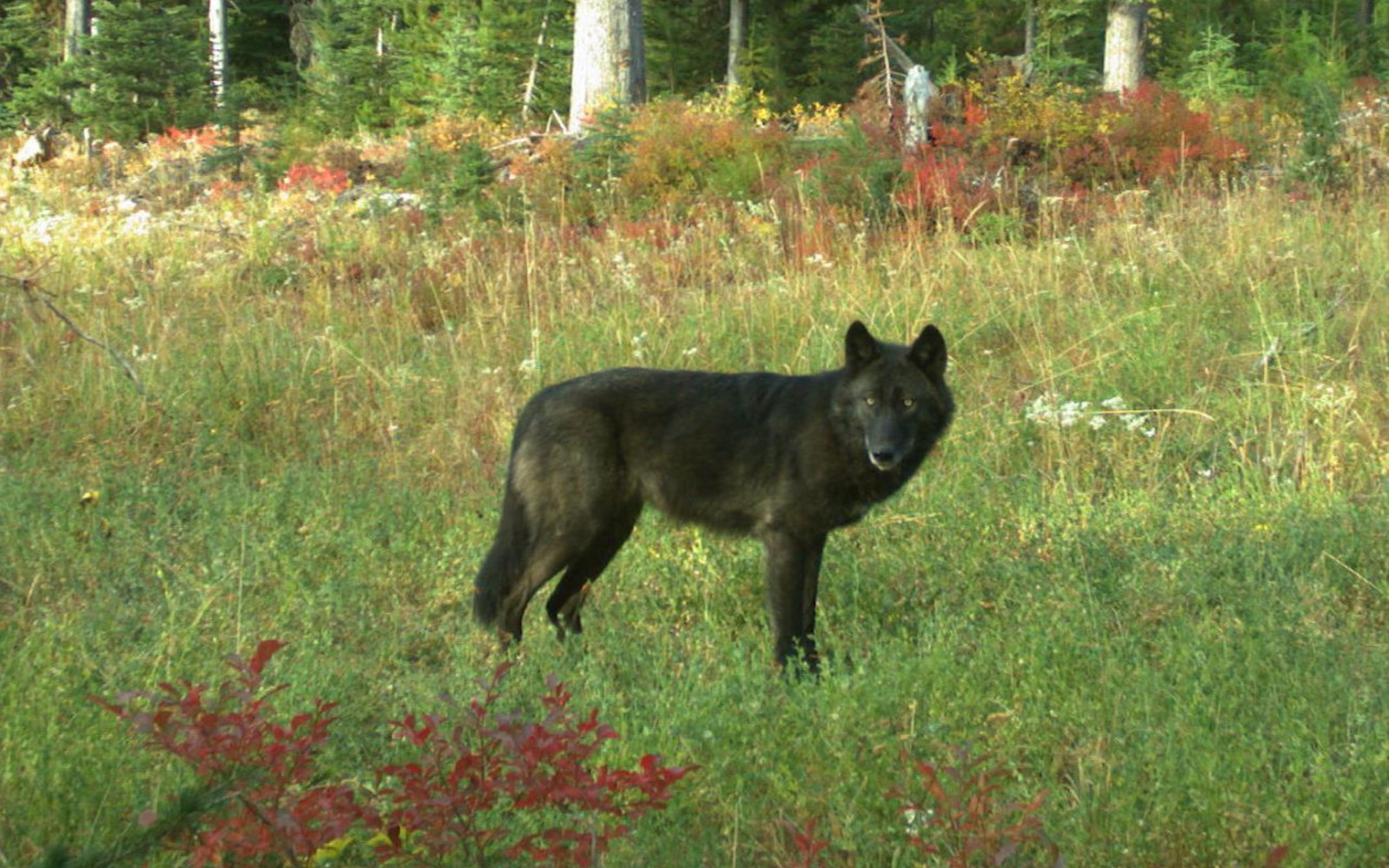
Federal authorities intend to remove endangered species protections for all gray wolves in the Lower 48 states, carving out an a exception for a small pocket of about 75 Mexican wolves in the wild in Arizona and New Mexico, according to a draft document obtained by The Times.
 
The sweeping rule by the U.S. Fish and Wildlife Service would eliminate protection for wolves 18 years after the government reestablished the predators in the West, where they had been hunted to extinction. Their reintroduction was a success, with the population growing to the thousands.
 
But their presence has always drawn protests across the Intermountain West from state officials, hunters and ranchers who lost livestock to the wolves. They have lobbied to remove the gray wolf from the endangered list.
 
Once those protections end, the fate of wolves is left to individual states. The species is only beginning to recover in Northern California and the Pacific Northwest. California is considering imposing its own protections after the discovery of a lone male that wandered into the state's northern counties from Oregon two years ago.
 
The species has flourished elsewhere, however, and the government ended endangered status for the gray wolf in the northern Rockies and Great Lakes regions last year.
 
Mike Jimenez, who manages wolves in the northern Rockies for the Fish and Wildlife Service, said delisting in that region underscored a "huge success story." He said that while wolves are now legally hunted in Montana, Idaho and Wyoming, the federal agency continues to monitor pack populations and can reinstate protections should numbers reach levels that biologists consider to be dangerously low.
 
Scientists and conservationists who reviewed the plan said its reasoning is flawed. They challenged how the agency reconfigures the classification of wolf subspecies and its assertion that little habitat remains for wolves.
 
Jamie Rappaport Clark, the former director of the Fish and Wildlife Service and now the president of Defenders of Wildlife, said the decision "reeks of politics" and vowed that it will face multiple legal challenges.
 
"This is politics versus professional wildlife management," Clark said. "The service is saying, 'We're done. Game over. Whatever happens to wolves in the U.S. is a state thing.' They are declaring victory long before science would tell them to do so."
 
The Fish and Wildlife Service is expected to release its decision to delist the wolves in coming weeks and it could become final within a year. Brent Lawrence, a Fish and Wildlife Service spokesman, said Thursday that the agency would not comment.
 
The proposed rule is technically a draft until it is entered into the Federal Register.
 
Some scientists agreed with the decision to delist the wolves. But several took exception to some of the findings that the agency included in the document, including the scientifically disputed issue of defining wolf subspecies.
 
"It's a little depressing that science can be used and pitched in this way," said Bob Wayne, a professor of evolutionary biology at UCLA.
 
Wolves were once common and ranged across much of the continental United States, a vestigial symbol of the Old West and its expanse of open, wild country.
 
But as the West became urbanized and ranching spread, government-subsidized hunting that offered bounties for wolf kills virtually wiped out the animals by the 1930s.


Mar05

Press Release: 52 Members of Congress Urge Continued Federal Protections for Wolves in Lower 48 States

For immediate release, March 5, 2013

Contacts:
Noah Greenwald, Center for Biological Diversity, (503) 484-7495
Josh Laughlin, Cascadia Wildlands, (541) 434-1463

PORTLAND, Ore.— In an effort championed by Reps. Peter DeFazio (D-Ore.) and Ed Markey (D-Mass.), 52 House members sent a letter today to the director of the U.S. Fish and Wildlife Service urging an about-face on the agency’s anticipated proposal to remove federal protections for wolves across most of the lower 48 United States.

“We are grateful that these 52 representatives are standing strong for continued federal protections for wolves,” said Noah Greenwald, endangered species director at the Center for Biological Diversity. “With wolves only just beginning to recover in the Pacific Northwest, California, southern Rocky Mountains and Northeast, now’s not the time for the Fish and Wildlife Service to turn its back on wolf recovery.”

An estimated 2 million wolves once roamed freely across North America, including most of the United States. But bounties, a federal extermination program and human settlement drove the species to near extinction in most of the lower 48. While protected by the Endangered Species Act, wolf populations in the northern Rocky Mountains and the Western Great Lakes states increased; but these regions amount to a mere 5 percent of the wolf’s original range, and in other regions wolves are only just beginning to return.

“The job of wolf recovery is far from over and the members of Congress who have written to the Service are asking that science, not politics, guide federal wolf management,” said Josh Laughlin of Cascadia Wildlands. “Maintaining federal protections is critical in allowing wolves to assume their valuable ecological role across the American landscape.”

Since the original wolf recovery plans were written in the 1980s, scientists have learned much more about wolves’ behavior, ecology and needs. Research has shown that returning wolves to ecosystems sets off a chain of events that benefits many species, including songbirds and beavers that gain from a return of streamside vegetation, which thrives in the absence of browsing elk that must move more often to avoid wolves. And pronghorn and foxes are aided by wolves’ control of coyote populations. Protecting ecosystems upon which species depend is a specific goal of the Endangered Species Act — all the more reason for expanded, rather than diminished, wolf recovery efforts.

Bowing to political pressure from wolf opponents, the Service has no plans for wolf recovery in areas beyond those regions it has deemed recovered (the northern Rockies and western Great Lakes). In states where federal delisting has occurred, there are insufficient protections from local pressures to hunt or “control” wolves back to the brink of extinction. In the 18 months since federal delisting began in 2011, more than 1,700 of the 5,000-6,000 recovered wolves in the lower 48 have been killed.

Conservation organizations are hopeful that Interior Secretary nominee Sally Jewell will be a stronger advocate for wolves than outgoing Secretary Ken Salazar, who never called for comprehensive gray wolf recovery across the country.

The Center for Biological Diversity is a national, nonprofit conservation organization with more than 500,000 members and online activists dedicated to the protection of endangered species and wild places.

Cascadia Wildlands is a Eugene, Oregon-based nonprofit conservation organization that educates, agitates and inspires a movement to protect and restore Cascadia’s wild ecosystems.
    

                                                                  ###


Feb27

Quick Action Needed on the Alexander Archipelago Wolves—February 28th by 5:00 PM

By Bob Ferris

“We always kick the dog when the old woman farts”
 
There is an old quote from the movie “10” with the late Dudley Moore that I often paraphrase as the above.  The quote actually goes like this: Whenever Mrs. Kissel breaks wind, we beat the dog.  The essence of this is not the words but rather that the critter that is not responsible for the offensive act gets punished.  (We certainly would not beat Mrs. Kissel for heaven’s sake.)
 
If you substitute wolf for dog and the timber industry for Mrs. Kissel, you already understand much of the current dynamic with the Alexander Archipelago wolves of Southeastern Alaska.   Here the timber companies come in and cut down trees that once served as wintering cover for deer.  Then the deer populations become more vulnerable both to the weather and predation.  But we do less than nothing to the harvesters of the precious habitat.  And in our need to do something, we kill the wolves in a tragic instance of ecological injustice.  This is true in these coastal Alaskan islands and we see the same thing on Vancouver Island in British Columbia.  
 
One of the areas currently under consideration for wolf control includes the Tonka timber sale which we are fighting and was highlighted in a previous blog.  Our belief is that our strategy will result in more trees, deer and wolves while theirs will simply result in less of all these elements.  And it should be remembered that the Alexander Archipelago wolf has been submitted for federal Endangered Species Act protections.  
 
Right now—and by that I mean today and tomorrow—are the last two days to let the Alaska Board of Game know how you feel about “kicking the dog” before they stop taking comments as to which predator control program to adopt if any.  To take action on this important wolf issue, please visit this Alaska Wildlife Alliance Action Alert for details on how to submit electronic comments as well as a great list of talking points to inform your comments.  
 
We are sorry for the late notice on this, but please kick us rather than the wolves.

Jan31

Crony Capitalism on the Tongass

by Gabe Scott

Where is the Tea Party when we need them?

I’ve been spending a lot of time lately with two thick Environmental Impact Statements — for the Tonka Timber Sale, and the Big Thorne Timber Sale — out of Alaska’s Tongass National Forest. These fellas are a blast from the past, a nostalgic but savage reminder of why our work continues to be so necessary on Cascadia’s northern forest.

The Tonka and Big Thorne timber sales target thousands of acres of old-growth for clearcutting. Trying to stay clear of controversial roadless areas, they’re logging mostly “leave” areas between past clearcuts, on places like Prince of Wales Island and Lindenberg Peninsula. The result would be huge, continuous clearcuts. Sacrifice areas, really.

One big problem is these huge swaths of land will be worthless to deer during hard winters. In good weather, even a clearcut can be good habitat for a deer. But when deep snow comes deer seek refuge in the shelter of big trees, and rely on the lichens beneath them to avoid starvation.

A related problem comes when clearcuts grow back into densely stocked second-growth. This shades out undergrowth, killing the herbs and shrubs that deer eat. A second-growth forest in the “stem exclusion phase” is worthless to deer from about 30 years after logging out. The condition lasts about a century, nobody is really sure.

Loss of deer winter habitat has spiraling negative effects to wolves and humans who eat them. If this sacrifice areas strategy goes forward, the ecosystem won’t just be damaged — it will be destroyed, thrown fundamentally out of whack. Places like Prince of Wales Island and Lindenberg Peninsula will no longer be able to support deer, human hunters and wolves. One of the three will have to give.

It’s pretty clear how this story plays out. The last few winters have been hard, and the places that have been heavily logged have seen huge declines of deer. On Lindenberg Peninsula, where the Tonka sale is proposed, the Alaska Board of Game voted this month to limit the deer season and bag limit. Worse, they are considering “predator control” plans to kill off 80% the wolves in the area, in a desperate effort to leave enough deer to hunt.

These are the consequences of logging, so why are we still doing this? The thing is, the Forest Service sees it as their job to prop up and grow a timber industry in Southeast Alaska. These massive logging projects are based on the idea that if enough forest is sold cheaply enough, new mills will rise from the ashes.

The facts aren’t there to support the scheme. The truth is, not being able to find enough trees was never the reason behind the old-growth industry’s decline. The reasons are obvious: the price you can sell trees for went way down, and the cost of logging went way up. There’s only one mid-size mill left in business (just barely).

The fact is this: it is not profitable to log and mill Tongass old-growth on any large scale.

There are all sorts of gimmicks used to disguise the fundamentally unsound economics. The Forest Service builds, maintains and repairs a vast network of logging roads with taxpayer money. They try to hide the millions of dollars it costs to design, lay out, and do environmental analysis for timber sales.

The strategy doesn’t even obey its own logic. The Forest Service routinely issues exemptions allowing loggers to bypass the local mill and export logs overseas. If the point is to save the local mills, then why are these sales geared to export markets?

What is going on here is exactly the kind of “crony capitalism” that Sarah Palin rails against. We have a few dozen people in the logging industry, a Forest Supervisor, and local politicians co-enabling each other by peddling a tired old narrative. There’s a veneer of rugged individualism, but really these are government-made jobs. Taxpayers are paying over a quarter-million dollars for each logging job being created.

The “jobs versus environment” debate has become so entrenched that most politicians don’t know how to think any other way. Eventually the facts will catch up, and Tea Party folks will realize Tongass logging for the wasteful government program that it is.

Until then, we’ll have to keep fighting these big timber sales like it’s 1999.


Aug30

Upper Minam Wolf Pack Documented in Eagle Cap Wilderness

The Oregonian by Richard Cockle

JOSEPH — Oregon has a brand new wolf pack, complete with a litter of five pups, discovered last weekend deep in the 560-square-mile Eagle Cap Wilderness of northeastern Oregon.

State biologists spotted two gray-colored adult wolves and their pups on Aug. 25 in the Upper Minam River drainage, said Michelle Dennehy, an Oregon Department of Fish and Wildlife spokeswoman.

The litter is the fifth documented this year in northeastern Oregon, bringing the number of new wolf pups for the year to 23 in the state, Dennehy said.

That adds to the 29 known wolves in Oregon counted by the end of 2011.

"Now, we will be monitoring them through the end of the year to see how many pups survive," Dennehy said.

The state could be on the cusp of achieving a major goal of its Oregon Wolf Management Plan: four breeding pairs of gray wolves for three consecutive years east of the Cascades. Achieving that objective could start the process to delist the gray wolf from the Oregon Endangered Species Act, Dennehy said.

Irregular reports of wolves roaming along the Minam River have come to ODFW biologists for several years, she said. A vacationing Idaho biologist reported finding wolf scat there while archery hunting six years ago.

State biologists have closely monitored the Minam River since a photo of a black lactating female wolf was taken there June 4. But the newly discovered adult wolves and pups are all gray and appear unrelated to the lactating female, Dennehy said.

Oregon's wolf numbers have steadily grown in recent years, with adult wolves in the Imnaha, Wenaha, Walla Walla, Snake River, Sled Springs and now Minam River packs, plus at least two adult wolves in the Mount Emily Game Management Unit between Pendleton and La Grande.

Additionally, biologists have confirmed two separate wolf packs in the Sled Springs game management unit. They also captured and radio-collared a 49-pound male pup Aug. 2 in the Snake River Pack.

Aug08

Elk Foundation Shucks Sound Science

Jackson Hole News and Guide guest opinion by Bob Ferris

Actions and inactions always speak louder than words. So it is very telling that, in the two weeks or so since the Murie family released their eloquent letter urging the Rocky Mountain Elk Foundation to return to science and tone down their anti-wolf rhetoric, we have heard nothing from RMEF's scientific staff. The silence is profound.

Sure, we were treated to tea party darling Jim Beers' rant on the Skinny Moose blog and saw a remarkably sophomoric press release focusing on wolf killing tips from RMEF, but where are the elk group's biologists? And where, too, are the group's logical and natural defenders from the conservation and hunting communities?

The answers to the above breaks down to one word: Murie. Wildlife professionals of all stripes hold the Murie family and Aldo Leopold's family in very high regard. And as much as RMEF CEO David Allen and his supporters try to ignore or dismiss the significance of this letter -to those of us in the field of wildlife -Murie's epistle is very serious business indeed.

I suspect the casualness with which RMEF electronically ejected Olaus Murie from its website and organizational persona shocked many. It was like it reached into itself and pulled out its own spine and then acted like nothing of note transpired. In all honesty, it really had no response to Donald Murie's concerns about ignoring the science and waging a war on wolves, but it seemed so strikingly abrupt and callous. It clearly had the feel and taste of a sudden death.

In many ways it is like a divorce. Former Bugle editor David Stalling courted the Murie family to establish the award in the late 1990s. At the time, it seemed like a perfect romance: A well-respected conservation organization with a biodiversity mission and elk focus forms a relationship with the family of a legendary biodiversity proponent and acknowledged father of modern elk management. What could be better?

But we all know that people and organizations change. In the case of the elk foundation, midway through is relation ship with the Muries, it started on a pathway that has taken it away from its stated mission. Its return to the dated and biologically selfish model of single-species management is as perplexing to many as its aggressive campaign against wolves in the absence of supporting and conclusive science.

We all have dealt with divorce in our lives, and it is of ten sordid and tawdry. We ultimately end up picking sides, mainly in accordance with our original allegiances to bride or groom. Sitting on the fence rarely seems an option. If we look at RMEF as the groom in this equation, one thing it has failed to grasp fully is that we in the scientific and conservation communities as well as in geographic communities like Jackson Hole, who know and have been touched by the Muries, are die-hard friends of the bride.

Moreover, RMEF does little to improve its public image by doing nothing to police its scant public defenders' efforts to question the motivations and qualifications of the Murie family and also, interestingly, the Leopolds. It is hard for me to describe how fast my blood pressure rose the other day when someone on one of the blogs claimed that Dale Earnhardt had done more for conservation than Olaus Murie or Aldo Leopold. But these are the people attracted to the elk foundation's current messaging. They bring to mind a chorus of drinking buddies who after materially contributing to the break-up besmirch the bride's character.

In my career I have worked more closely with the Leopold family than the Muries, but my recent experiences with the children and grandchildren of Olaus, Mardy, Adolph and Louise have absolutely mirrored that of the Leopolds. They are true conservationists and exude an authenticity that cannot be spun, marketed or photoshopped. These iconic families ushered in a new, more holistic way of looking at ecosystem functions, such as predator-prey relations and the consequences of myopic management schemes like maximizing game populations.

The rich tapestry opened to those taking a biodiversity view cannot adequately be observed via a single-species lens. One prime example is the elk foundation's position on climate change written, by Val Geist. The one-paragraph position from 2004 acknowledges coming changes but views them as largely positive for elk. While the position stops somewhat short of being jubilant, the analysis is extremely limited in terms of factors and potential scenarios. In sharp contrast, scientists working for a consortium of 12 sportsman groups predict dire consequences for elk in the Rockies, including the spread of disease, loss of sagebrush habitat and outright extirpation from areas in their current range. And this latter view is being borne out by experience as we see localized drops in elk population being attributed to drought conditions and related impacts to food resources and timing.

Having worked hard to shore up the finances of several nonprofits during my career, I can certainly understand the board's reticence to make leadership changes when its coffers are expanding in a down economy, but the Murie letter and the community's reaction should be taken to heart. Boards must govern with courage and foresight ever mindful of the fiscal health and reputation of the organization in their care. With David Allen at the helm, RMEF has one of these bases covered, and that is simply not enough. ­­­­­­­­­­­­­­­­­­­­­­­­­­­­­­­­­­­­­­­­­­­­­­­

Bob Ferris is the executive director of Cascadia Wildlands (CascWild.org) and a member of the volunteer team that went to Fort Saint John, British Columbia, in January 1996 to make sure the second translocation of wolves into the U.S. Rockies was not derailed by the government shutdown.


Article Link

Related Links:

Muries Rebuke Elk Foundation over Anti-Wolf Remarks

Rocky Mountain Elk Foundation–Needed: Less 10 Gallon Hats and More 10 Pound Brains


Jul25

Livestock Protection Dogs and Other Non-Lethal Tools to Deter Wolves

Turkish kangal with spiked collar (courtesy Cat Urbigkit)

As the wolf population in Oregon and Washington continues to grow, so too does the need to promote and utilize the non-lethal and proactive tools available to reduce conflict between wolves and livestock. There are many tactics livestock operators can employ to help protect their herds. Though their implementation doesn’t guarantee 100% effectiveness, understanding and utilizing these practices will likely help operators minimize their risk of loss.
 
Non-lethal tools can refer to a wide array of practices that can be grouped into a few categories. Best animal husbandry practices include such things as: 1) appropriate livestock breed selection, 2) night penning, 3) protection during birthing and of young animals, 4) carcass and bone pile removal, 5) afterbirth clean-up, 6) monitoring wolf activity and moving herds away from known wolf migratory corridors.
 
Active deterrents can also be implemented to keep predators away from livestock if they are known to be in the area. This class of tool includes: 1) scent repellants, 2) radio activated guard devices, 3) range riders, 4) fladry, 5) fencing, 6) livestock protection animals, and 7) hazing and harassing techniques.
 
These are some, but not all, of the tools that livestock owners can use to reduce the risk of predation. A few of these techniques are described in greater detail below. Please see the additional resources section to find out more information, including information about the State of Oregon’s recently enacted proactive fund for operators to utilize to reduce conflict between livestock and wolves before it happens.
 
Monitoring Wolf Activity
The Oregon Department of Fish and Wildlife (ODFW) offers communication resources for operators to keep track of wolf activity particularly if the wolves a GPS collar placed on them. The agency also keeps its website relatively up-to-date with pack locations and will communicate directly with operators about the specific location in relation to herds to minimize livestock depredation.
 
Fladry
The use of fladry as a deterrent relies on a wolf’s inherent dislike of bright colors and motion. Fladry is the use of flags tied to a rope and affixed to a pen or fence. Fladry can be used in conjunction with fencing and is relatively easy to add to an existing fence line. It can also be partnered with electric fences, sometimes referred to as turbo fladry. Fladry is often used as a temporary deterrent (up to 60 days) and can be very effective during high predation times. Some maintenance is required, as the flags need to be set in areas without obstacles. Underbrush and grass need to be trimmed depending on the height of installation.
 
Livestock Protection Animals
Livestock protection animals have been used worldwide for centuries. Depending on the type of predator and breed of livestock, protection animals can be donkeys, dogs, llamas and alpacas. Dogs have been widely used in the US in protecting sheep against coyotes, bears and cougars. Livestock protection dogs to deter wolves has been employed in a trial and error approach in the Rocky Mountain states. There are a number of factors that can limit effectiveness of using guard dogs against wolves, including breed, training of dogs, number of dogs, expense, geography, etc. Also, free ranging cattle pose different challenges for guard dogs as compared to sheep, which tend to flock together.
 
The list of breeds is long and varies by country; however, in the US common breeds are the Great Pyrenees, Akbash, Anatolian Shepherd, Komondo and Maremma. All livestock protection dogs are specifically bred for their ability to guard their herd; these animals are much different than pets. See resources below for more information about LPDs as a non-lethal tool.
 
Radio Activated Guard Devices
Radio Activated Guard (RAG) devices rely on a transmission emitted from a collared wolf. If a collared wolf comes into range of these devices they activate loud noises and flashing lights to scare away predators. This is an effective deterrent in smaller pasture areas due to the limited range of the RAG device. Another major drawback of these devices is the dependency on a collared wolf entering the area. If no collared wolves are part of the intruding pack, these devices are not triggered.


Jun06

Wolf: Recent Updates

May 2, 2012: The wolf found dead in early March in Union County is confirmed a poaching by Oregon State Police and ODFW. The investigation of the crime continues.
 
March 14, 2012: 9th Circuit Court of Appeals upholds the district court ruling and allows the delisting of gray wolves in the Rocky Mountain states of Montana and Idaho (wolves are still listed in Wyoming due to the state's egregious management plan). Gray wolf hunting resumes.
 
March 7, 2012: Bill to overturn the ban on killing Oregon's endangered gray wolves is defeated in Salem. The Register-Guard earlier opined on the subject, opposing the extreme legislation. Cascadia Wildlands and allies spent considerable time in Salem educating policy makers and testifying against this the reckless legislation.
 
February 2, 2012: Oregon Cattlemen's Association brings a bill to the state legislature to overturn the recently issued injunction that prohibits killing Oregon's endangered gray wolves.
 
December 30, 2011: OR-7, or Journey, makes his way into California from Oregon, becoming the first wolf to return to the state in nearly 80 years.
 
December 28, 2011: Oregon's four known wolf packs, the Imnaha, Wenaha, Walla Walla and Snake River packs, all reproduced in 2011. Oregon currently has approximately 29 confirmed wolves in the state according to the Oregon Department of Fish and Wildlife.
 
December 12, 2011: Dispersing Imnaha Pack wolf, known as OR-7 or Journey, travels 730 miles to southwest Oregon looking for love and a home.
 
November 14, 2011: Oregon Court of Appeals extends ban on killing endangered Oregon wolves.
 
November 1, 2011: Imnaha Pack disperser located in the Umpqua National Forest. This marks the first confirmed wolf in the Oregon Cascades in over 60 years.
 
October 5, 2011: Oregon Court of Appeals grants emergency stay of execution of two Imnaha Pack wolves.
 
October 5, 2011: Cascadia Wildlands and allies file a legal challenge in state court to immediately halt the state killing of two of the remaining four Imnaha Pack wolves and send Governor Kitzhaber and key legislators a memo on our lawsuit.
 
September 26, 2011: At least two pups documented in Walla Walla Pack by ODFW.
 
September 23, 2011: Oregon Department of Fish and Wildlife issues a kill order for the alpha male (pack leader) and a yearling in the Imnaha Pack after a confirmed livestock depredation near Joseph, OR, deeming the situation as "chronic."
 
June 6, 2011: Cascadia Wildlands and allies send a letter to Oregon Department of Fish and Wildlife about the recent lethal control of two Imnaha Pack wolves, kill order for up to two more wolves, and the issuance of 24 "caught in the act" kill permits to private landowners. The groups also issue a press release to draw attention to the heavy-handed response to the recovering wolf population in Oregon.
 
May 18, 2011: Oregon Department of Fish and Wildlife kills second Imnaha Pack wolf in the past three days after attributing recent livestock depredations in Wallowa County to the pack.
 
May 3, 2011: Cascadia Wildlands and allies file a legal challenge against US Fish and Wildlife Service's order to kill two Imnaha pack wolves. The kill order is issued after a May 1 calf death in Wallowa County is confirmed as a wolf kill.
 
April 14, 2011: Congress legislatively delists gray wolves in the northern Rockies from the Endangered Species Act as part of a rider attached to the federal budget bill. In addition to removing federal protections in Montana and Idaho, the unprecedented action also strips protections for wolves in eastern Oregon, eastern Washington and northern Utah. The delisting will likely mean sport hunting for wolves in Montana and Idaho this fall.
 
March 30, 2011: Cascadia Wildlands presents testimony in the House Agriculture and Natural Resources Committee in the Oregon Legislature on a number of bills affecting Oregon's recovering gray wolf population. Following the hearing, the Oregonian runs an op-ed submitted by Cascadia, and the Register-Guard opines on the efforts to strip protections for wolves in Oregon.
 
March 18, 2011: Cascadia Wildlands and eight co-plaintiffs settle our legal challenge to the Obama administration's Northern Rocky Mountains gray wolf delisting from the Endangered Species Act.
 
March 1, 2011: Cascadia Wildlands delivers a memo to all 90 Oregon legislators describing anti-wolf bills that have been introduced into the 76th session in Salem.
 
March 1, 2011: Yearling female from Oregon's Imnaha pack found dead. The cause of the death of the February 25-collared wolf is unclear.
 
December 2010: Idaho and Montana senators propose to legislate delisting of gray wolves in the Rockies.
 
October 8, 2010: Conservation groups offer $7,500 reward for information leading to the prosecution of the person/s responsible for killing an endangered gray wolf from the Wenaha Pack in eastern Oregon.
 
August 5, 2010: Federal district court judge Donald Malloy in Missoula rules in favor of Cascadia Wildlands' lawsuit challenging the government's delisting of the gray wolf from the Endangered Species Act in the northern Rocky Mountains. Cascadia was one of 13 co-plaintiffs and was represented by Earthjustice in the case.
 
July 8, 2010: Cascadia Wildlands and allies file a lawsuit and halt the hunt of members of Oregon's Imnaha wolf pack.
 
Fall-Winter 2009: Over 250 gray wolves are killed in Montana and Idaho during sport hunts after wolves are delisted by the Obama administration.
 
September 8, 2009: Federal district court judge Donald Malloy in Missoula rules against Cascadia Wildlands' request for a Preliminary Injunction but suggested in his ruling that we are likely to succeed on the merits of the lawsuit. The lawsuit will likely be heard in early 2010.
 
September 5, 2009: Two wolves in Baker County's Keating Valley are killed after repeated depredations of livestock. The two wolves, which are apparently not part of an organized pack, represent approximately 20% of the known wolves in Oregon today.
 
June 2, 2009: Cascadia Wildlands and 12 conservation partners represented by Earthjustice legally challenge the removal of Endangered Species Act protections for gray wolves in Idaho, Montana, and eastern Oregon and Washington.
 
April 2, 2009: The Obama administration's US Fish and Wildlife Service removes gray wolves from the Endangered Species Act, finalizing an effort initiated by the Bush administration. Idaho and Montana begin to plan a wolf hunting season.
 
July 18, 2008: Federal District Court Judge Donald Malloy issues a preliminary injunction halting the gray wolf delisting in the Northern Rocky Mountains. This is not a ruling on the merits of the case, rather a placeholder while attorneys argue the claims. Read the injunction opinion for more information.
 
April 28, 2008: Following up on its February 27 notice of intent to sue, Cascadia Wildlands and 11 co-plaintiffs file a lawsuit and preliminary injunction request to halt killing of gray wolves in Idaho, Montana and Wyoming. Since the delisting occurred in March, dozens of wolves have been killed by sport hunters.
 
February 27, 2008: Represented by Earthjustice, the Cascadia Wildlands and 11 co-plaintiffs file a 60-day notice of intent to sue the US Fish and Wildlife Service over the removal of the Northern Rocky Mountains population of the gray wolf from the Endangered Species Act. The delisting will turn over management of the species to states in the inter-mountain West. Montana, Idaho and Wyoming all have management plans in place that would permit rampant killing of wolves.
 

May10

Aldo’s Red Rock Inspires


“There are some who can live without wild things and some who cannot.” 
― Aldo Leopold
 

The Shack Red Chert

Aldo Leopold—arguably the father of modern wildlife conservation—expressed the above sentiment in his seminal work A Sand County Almanac.  I subscribe to that notion as well.  It is one of the reasons that I skipped school to attend the first Earth Day celebration and eventually entered the field of wildlife conservation.  It is also one of the core reasons that I accepted the job as executive director of Cascadia Wildlands as I would like to think if Dr. Leopold were alive today, he would probably be standing right along with us and shouting: We Like It Wild!  
 
Aldo has been in my thoughts lately for several reasons.  First, my wife and I recently went to a screening of the film Green Fire.  Aside from encapsulating Leopold’s important story for yet another generation, it was wonderful to see old friends like Curt Meine and the late Nina Leopold Bradley—Aldo’s daughter.  It also brought me cinematically close to friends from my past such as Dave Parsons who was the agency lead on the Mexican wolf project and newer friends like Peter Forbes who was with the Trust for Public Lands for many years and later founded the Center for Whole Communities in Vermont with his wife Helen Whybrow.  In many ways the movie worked for me like a virtual facebook fan page for Leopold—all of us his students by extension and all of us subscribers to his concept of a Land Ethic
 
The second reason he was on my mind was that I recently packed up my office in preparation for my move from Bellingham to Eugene.  And one of the first things I always pack is a blood-red, river smoothed chunk of chert.  The rock fits perfectly in my hand and when I rub it, a certain calmness washes over me.  That calmness allows me to focus and think about what needs to be done and what I and others can do to bring about the most beneficial changes in the realms of conservation and sustainability.
 
I met this rock roughly twenty years ago at the bottom of a hole I had dug near the banks of the Wisconsin River to plant a pine tree in celebration of a successful conservation meeting.  The hole was about fifty feet from a converted chicken coop known to all Leopold fans as “The Shack.”  This is where Leopold and his family spent weekends and where large parts of A Sand County Almanac were inspired and composed.  I showed the rock to Nina and she gave me permission to take it along with a handful of acorns for my staff back in DC.  
 
“The last word in ignorance is the man who says of an animal or plant, "What good is it?" If the land mechanism as a whole is good, then every part is good, whether we understand it or not. If the biota, in the course of aeons, has built something we like but do not understand, then who but a fool would discard seemingly useless parts? To keep every cog and wheel is the first precaution of intelligent tinkering.”
–Aldo Leopold 
 
The rock is not my only Sand County anchor.  I am also connected academically and experientially.  A. Starker Leopold was arguably one of his father’s last students and the late Ray Dasmann was Starker’s last student at UC Berkeley.  So when I entered graduate school at UC Santa Cruz, Ray was one of the first people I approached for my graduate committee.  As a result of this academic lineage, colored so fully by Leopold’s own intellectual evolution regarding predator roles in ecosystems as expressed in essays such as Thinking like a Mountain, I seemed almost predestined to work on Yellowstone wolf recovery and its natural extension—this current re-colonization of the remote and wolf-free areas of Cascadia.  The same could be said for my absorption of Leopold’s early 1900s experiences relating to the folly of plantation forestry in Europe and Cascadia Wildlands advocacy for science-based forest management and the importance of “intelligent tinkering” and keeping every “cog and wheel” extant like Northern Spotted Owls and Marbled Murrelets.
 
The acorns were planted and unfortunately did not grow.  The rock, however, continues to inspire me and at the same time challenges me to live up to the standards and aspirations set by Aldo and the rest of the Leopolds.   My hope is that the rock will continue to inspire me as I work with all of you to keep large elements of Cascadia wild.  
 
Thank you for reading the first post in Cascadia Wildlands' new blog.  We hope that this piece and the others that follow will inform and inspire.  We would also encourage readers to follow this blog as well as comment and get engaged in dialogues on these topics and thoughts with us here and on our facebook fan page.  
 
Bob Ferris
Executive Director
Cascadia Wildlands
bob(at)cascwild.org


we like it wild. Follow us Facebook Twiter RSS